Crows Follow Us Carrying Chimes

November 8, 2009

See accompanying video here: While. Waiting. To. Explode.Calling the Crows

On The
Walk, Video, Afternoon:

Brisk, cold wind pushes us as we search out new places on the inner trails of the island.  We walk from home over Covey’s land to Little Trot John Park.  Pass by horse with the sharpest, most cutting eyes i have ever seen.  I don’t know the names of any of the horses boarded in the barns back there but i always stop and try to talk to them.  The one we passed on our way out to explore kept trying to eat my hand thinking i brought a carrot.  He was smaller, young looking, dark but not really black or brown.  Cole left me trying to get to know this horse, continuing ahead.

I caught up and we walked up and around into part of the Park where a few people on the island have gotten together to start a community garden.  It looked as though they were trying to kill the grass in a 30×40 section of land with cardboard piled a top with mulch.  There was a a decent rug too, in one spot.  There was no mulch on the rug.  We walked through the dieing grass, and down towards the transfer station in order to head into the marshy woods situated across from it.

It was the end of the trail we had blazed yesterday when we entered the woods higher on Brackett Street.  We were aiming to find another way back onto a trail we had already travelled.  We passed these amazing marsh plants that look like the above water version of sea anemones.  They were visibly succulent, low, flowering, yellowish green, with reddish buds — beautifully squishy islands in the marshy areas.  It was unfortunate to stomp on them, and i kept thinking of how maybe we should be trying to protect them more (instead of stomping them.)  Still we used them for stepping stones through the parts that were hard to navigate due to the stranglehold of the invasive barberry and bittersweet.

We meet back up with the marked trail that, we guess, the Peaks Island Land Preserve maintains.  The trail is marked with three vertical dots in white spray paint about 8 feet up on a tree lining the path.  A man we ran into yesterday had been going over these blazes with glow in the dark spray paint, he said, so his wife could walk the path at night.  It was a very remarkable gesture to witness.

Today, an even more remarkable gesture occurred.  As we walked up a branch of the trail we have yet to experience, we came across a wind chime.  It hung on one branch of a small tree that seemed to proclaim we had reached a high ground, a stopping point, a meditation spot.  However, in all of its perfectness, it had lost three of its rods to worn out strings and they lay in the leaves, silent.  Cole thought this sad and wanted to do something.  I immediately thought we should take it home and fix it and bring it back.  He thought we could tie them back on right there.  This was attempted but to no avail as the strings simply needed to be replaced and were too short to tie up.  Therefore, my first thought prevailed and we decided we would take it home to fix and bring it back for whoever it belonged to enjoy anew.

Taking up the sturdy, rusted, metal crate i had slung a stick through and carried in one hand — the stick was warmer to carry than the metal itself — and the not worn through string the chimes were hanging from in the other, we continued.  The chimes jingled as we shuffled through leaves back out to the main road.  Cole said he thought they were happy.  They certainly sounded happy to be moving.  It re-affirmed my belief that most things are happier when they’re moving.   Maybe happiness is created in moving.  Even if that is not true or relevant at all to the chimes, they made wonderful sounds being carried through the November woods.

The crows thought so too.  Before long, there were caw ca CAWS flying towards us.  They lighted in the trees above us, and had corralled Heta back, possibly from the road as we were getting closer to cars.  They kept following us and cawing, and cawing, and flying above us all the way up to the road, and even then on the road some too.  The jingling chimes went with us and so did the crows.

We cut back over Brackett, back over to where Covey boards the horses leaving the crows behind, still cawing at us but not moving into different territory.  We were back in the horses territory and there was another really striking darker and slightly larger horse in the corral across from the one we saw on our way heading out.  This horse I wish I knew the name of.  He let us rub him a little and we would have stayed and spent more time but there was a man with two small dogs who were following our dog.  So we walked away from the horse whose name i wish i knew and he started whinnying at us to come back.  He whinnied until we were out of sight over the hill and i kept saying “bye” loud enough so he could hopefully hear, but i did feel bad we left him so quickly.

We began to talk about all the animals we had seen today and it dawned on me that when i did my medicine cards with my cousin in Utah a few years back i had pulled both a Crow and a Horse.  Also a Mouse (which eats pie i leave on the counter) a Butterfly (which we hatch) an Armadillo (which Cole and i just drew together)  a Lizard (orange salamander things in NH) and a Dolphin (Minke whale Cole and I saw sailing the sunfish last fall) and I think the last one was a Fox (i can’t find the piece of paper i wrote all of it down on) (Cole has a stunning photograph of a dead coyote which i think is a comparable animal.) There are eight animals in a totem which makes up your medicine cards (one pulled for each direction i.e. north, south, east, west, northeast, soutwest etc.)  You can only pull the cards once in your life, from what i remember.  In other words, the animals I picked in Salt Lake would be part of my totem everywhere, i would carry them within me my whole life.

It was just a thought that struck me on the end of our walk, how all the animals that we encounter through living on this island are ones that might be related to me somehow.  Possibly related to Cole as well.  The coyote and the crows i think are.  We need to find some medicine cards and he can draw them and find out.  Staying on track though, we walked home, the chimes were still sounding the whole way.
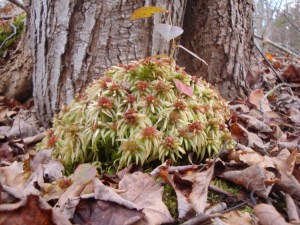
Unidentified Island Plant (Grows in the Marshes)

Bittersweet November Walk 09


On Longing – Susan Stewart

November 4, 2009

Prologue

“Let me begin with the invisibility and blindness of the suburbs.  Between classes, a fundamental slippage – the absence of the landscape of voyage.  The suburbs present us with a negation of the present; a landscape consumed by its past and its future.  Hence the two foci of the suburbs: the nostalgic and the technological. A butterchurn fashioned into an electric light, a refrgerator covered by children’s drawings, the industreial “park,” the insurance company’s “campus.”  The celibacy of the suburbs articulates its inversion of nature: the woman becomes a sun, the man a revolving moon.  Here is a landscape of apprehension: close to nature, and not sonsumed by her; close to culture, close enough to consume her.  In the topography of the suburbs is revealed the topography of the family, the development , a network of social relations and their articulated absences.  To walk in the suburbs is to announce a crippling, a rennunciation of speed.  In the suburbs only outsiders walk, while the houses are illuminated as stages, scenes of an uncertain action.  In these overapparent arrangements of interior space, confusion and distance mark the light.
The countryside: space ideal, space of childhood and death.  The forest remote, water mirroring not ourselves but the infinite distance of sky.  WIthin patterns of nature, we search for traces of the human: a tiny rowboat pulled up to shore, the oars folded and asleep.  Perhaps a figure, but microscopic, and on the edge of some oblivion — a cliff, or the other side of the painting.  Everwhere signs of cultivatoin and wilderness: the plowed field of poetic lines, the ax left leaning against a colossal tree.  The countryside unfolds, maplike before us, simultaneous and immediate.  And yet always the problems of horizon and distance, the problems of depth and breadth.  As we begin to traverse the field of vision, the tragedy of our partial knowledge lies behind us.  The distance becomes infinite, each step an illusion of progress and movement.  Our delight in flying comes from the revelation of countryside as sky and sea, from the transcendence we experience over vast spaces.  Yet to see the thin and disappearing signature of the jet is to see the poverty of this flight to omniscience; in each photo appears the grim machinery of the wing.  In the notion of return, of cycle, of the reclamation of landscape, lies the futility and productive possibility of human making.
To walk in the city is to experience the disjuncture of partial vision/partial consciousness.  The narrativity of this walking is believed by a simultaneity we know and yet cannot experience.  As we turn a corner, our object disappears around the next corner.  The sides of the street conspire against us; each attention suppresses a field of possibilities.  The discourse of the city is a syncretic discourse, political in its untranslatability.  Hence the language of the state elides it.  Unable to speak all the city’s languages, unable to speak all at once, the state’s language becomes monumental, the silence of headquarters, t he silence of the bank.  In this transcendent and anonymous silence is the miming of corporate relations.  Between the night workers and the day workers lies the interface of light; in the rotating shift, the disembodiment of lived time.  The walkers of the city travel at difference speeds, their steps the hand-writing of a personal mobility.  In the milling of the crowd is the choking of class relations, the interruption of speed, and the machine.  Hence the barbarism of police on horses, the sudden terror of the risen animal.
Here are three landscapes, landscapes “complete” and broken from one another as a paragraph is.  And at the edge of town, the camp of the gypsies.”


Missing the Ferry Hurts

November 3, 2009

On schedule, it goes in and out.  With no awareness of us — of course, the captain can see us running down the hill and give an extra 30 second pause — the boat can’t see.  There’s no point in me trying to put the blame on the boat anyway.  Rather, i should put it on my watch.  My digital watch that i haven’t let the hour fall back on, so for the past two days I’ve had to subtract an hour, look again, think I’m running late, trick myself into right now.  It’s really all too much — not all days, but — today when i missed the ferry, it hurt.

The window of opportunity to devote a chunk of time to a project was clouded with the thought of getting on the ferry in two hours.  Now, two has turned to four and a half.  I have wasted four and a half hours waiting and missing a boat.  The frustration!  The disappointment! The shame!  The mental effort to place blame elsewhere only to know it can only fall on myself.

7:40 not 7:45.  The phone rang at 7:37 with Cole calling me to say he thought i got on an earlier boat and not to miss this one, he was waiting for me on the other side.  I couldn’t find my right boot!  I had taken it off because i was working on a blister and was trying to decide if a change of socks would help or just some tape around my heel.  I couldn’t find my boot once i decided on tape and this after knowing i needed to run.

What was I doing up until the point of that call?   There’s no mystery.  I had given Heta a shower to get the muck from the beach off her.  I had been watching youtube videos of Waylon Jennings in search of some old country duets.  I had been driving down to the ferry at 645 only to find i hadn’t looked at the schedule right and the boat wasn’t til 7:40.

Why is my timing not in sync with the ferry?  I blame it on getting accustomed to the new time change, and the fact that ghosts move my boots around so i can’t find them when i need them.


[WAx] Transport Badges

October 27, 2009


Thoroughfare

October 26, 2009

you see too (two)

one as ahab


no. 1

October 20, 2009

BLOW UP!

EXPLODE.


[WAx]’s Peach Pie Mix

October 20, 2009
Peach Pie Playlist

Peach Pie Playlist

Peach Tree on McCrillis Hill, NH

Peach Tree on McCrillis Hill, NH

Fall 2009

Peach Pie Counter, Caswell Compound

If you would like a copy of the disc send donations to 309 Island Ave.  All proceeds benefit a 2009 [WAx]  performance.


May Sarton

October 17, 2009

“How one lives as a private person is intimately bound into the work. And at some point I believe one has to stop holding back for fear of alienating some imaginary reader or real relative or friend, and come out with personal truth. If we are to understand the human condition, and if we are to accept ourselves in all the complexity, self-doubt, extravagance of feeling, guilty, joy, the slow freeing of the self to its full capacity for action and creation, both as human being and as artist, we have to know all we can about each other, and we have to be willing to go naked.” -May Sarton


The Sacred and The Profane 2009

October 5, 2009

October 3, 2009


To Live on a Preserve Would Be:

September 22, 2009

desirable

isolated

anti-social

a lesson in adaptation

A beautiful experience

Learning to find your place

Possibly cold if you didn’t bring the right clothes

Possibly hot if you didn’t bring the right clothes

Great for my imagination

Heta’s Dream

My Dream?

Floating Island

Floating Island - Alexander Asadov

As fears of global warming induced population displacement are steadily realized, the allure of waterborne aquatecture becomes more and more enticing. Designed by Alexander Asadov, this incredible floating Aerohotel features a lighter-than-air aesthetic that sits serenely atop an elegant system of supports. Conceived as an elevated aquatic structure replete with hanging gardens, the space-age floating island preserves the entire extent of the ecosystem beneath it, contrasting with man-made islands that disrupt their immediate environment with tons of gravel fill.

http://design-pedia.blogspot.com/2009/02/again-green-design-stuffs-architecture.html


Gaining the Confidence to Define What to Change (An Example of Talking oneself into Changing)

September 16, 2009

Questions:

Do some people — who once understood a way of communicating — stop understanding, once ones efforts are driven to master more communicative techniques in order to get other/more people to understand?  Should one be conscious of retaining all ways of communicating or decide one-way is better than another?  Is large-scale communication just hard and often misunderstood or does it need to have more effort put into clear pathways that are accessible to all?

Clarity seems to be the underlying issue.  Clarifying how one was communicating to begin with, deciding what must change and what must be retained in order to be understood.  Analysis of what ways you are successfully communicating or failing to communicate then point towards awareness, disregard, desire, carefulness, love, response-ability, and looking intently at the parts that need to be looked at.

It is important to be able to pick something apart. To learn to be objective in order to subjectively respond to the whole (to what pieces have been gathered.)  Ignoring or not noticing  — a general  unobservant disposition — can lead to a constant state of ignorance.  Although ignorance is bliss, it is also a huge blockade in being a worthy participant, engaged with those who are aware of a shared situation.  People are only in situations they create for themselves,  so why would one not be held accountable for something they have created?

This (irresponsibility) is often the case due to an individual’s inability to cope with what they have created.  It is a lack of self awareness, a disregard for a seemingly “failed” product.  There is a need to learn how to be proud of failures and embrace them in order to preserve any indicator of how to fail less the next time.  Therefore, one must be confident in their creation and cope with whatever it produces.  Acknowledging all successes and failures and continuing to engage on all and every level shows an effort to understand all that is perceptible.

The question then becomes why would someone choose to not see something right before their eyes?  It is again determined that they choose not to cope or that they are blind(ignorant).  Perhaps, blindness is a by-product of cultural conditioning or it is a chosen trait or it is an un-educated vision.  This is why knowledge is powerful and important, as it helps one to see.


Ree Morton

September 10, 2009

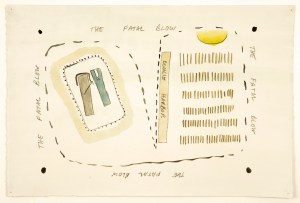
Showing at the Drawing Center  http://drawingcenter.org/exh_upcoming.cfm?exh=661Ree Morton - The Fatal Blow

all that is drawn is subjected to the FATAL BLOW, not in a circle but in a circle with a V in it so as not to waste space that does not need to be hit by the fatality!  some of the space is saved!


First attempt: Writing For a Newspaper

August 25, 2009

Jamie Hogan, contributing voice on our local

— island and city —

Art Scene

recently contacted me wondering about

myself/my collaborator/our collective

periodically writing into the Island Times.

Since my practice is individually and collectively

based on the necessity of multiple perspectives

— and responses to perspectives affecting our abilities —

to understand the land

( a family, a community, an island, a landscape, a place, an environment. )

It seems appropriate to make a foray into a written forum

to put forth ideas,

and yet an other, island perspective.

Living on an island, albeit a hop skip and a jump from Portland,

leaves one disconnected

— for whatever length of time we sojourn here —

to the wondrous world of unbounded perspectives.

(Un)defined Perspective 1: On Photography:

Cole has gained access to a Vermont manufactured, Zone Six,  8 x 10 camera.   For those camera lovers out there, you know how good this makes one feel to run such a beautiful tool.

The camera is so stunning in fact that Rhonda Berg and Eleanor Morse, on their way down City Point Road to Centennial Beach, became enthralled with the site set up in our backyard.  From where i was inside i could hear ” Look at that, is that a camera?” and one of them say “Yes, it is!”  The hope in which they asked the questions to each other, the tone in their voices that said “Look, you don’t see this anymore, i can’t remember the last time i saw one of these,”  made myself and Cole walk outside to say “Hello.”

Rhonda recounted

when a man used to come to her house and take her family’s portrait.

I asked, “was it at Christmas or for a wedding?”

She said, that she didn’t recall there being a reason.

An amazing bit of memory to share at a time when camera’s

are most typically mobile,

point and shoot,

anybody-can-press-a-button-tools-to-record-everything.

I walked away from our short gathering

realizing what brought us all into the backyard to converse

was the camera itself.

The camera was the occasion and there need not be more.


New Scottish Underpaintings

August 13, 2009
Underpainting 7/09

Underpainting 7/09

Underpainting 7/09

Underpainting 7/09

Underpainting 7/09

Underpainting 7/09

Underpainting 7/09

Underpainting 7/09

Underpainting 7/09

Underpainting 7/09

Underpainting 7/09

Underpainting 7/09


July 2009 Baie de Sainte-Marie, Nova Scotia

July 30, 2009
Artists in Residence / OPEN STUDIO

Artists in Residence / OPEN STUDIO