& coastal jungle sounds that are tercets from cicadas and pentameter from the hairy legs of cockroaches.
i’ve donated bibles to thrift stores
(mashed them in plastic trash bags with an acidic himalayan salt lamp—
the post-baptism bibles, the ones plucked from street corners from the meaty hands of zealots, the dumbed-down, easy-to-read, parasitic kind):
remember more the slick rubber smell of high gloss biology textbook pictures; they burned the hairs inside my nostrils,
& salt & ink that rubbed off on my palms.
under clippings of the moon at two forty five AM I study&repeat ribosome endoplasmic— lactic acid stamen
at the IHOP on the corner of powers and stetson hills—
i repeated & scribbled until it picked its way & stagnated somewhere i can’t point to anymore, maybe my gut—
maybe there in-between my pancreas & large intestine is the piddly brook of my soul.
it’s the ruler by which i reduce all things now; hard-edged & splintering from knowledge that used to sit, a cloth against fevered forehead.
can i let them both be? this fickle faith and this college science that heckles from the back of the classroom
now i can’t believe— that the bible and qur’an and bhagavad gita are sliding long hairs behind my ear like mom used to & exhaling from their mouths “make room for wonder”—
all my understanding dribbles down the chin onto the chest & is summarized as:
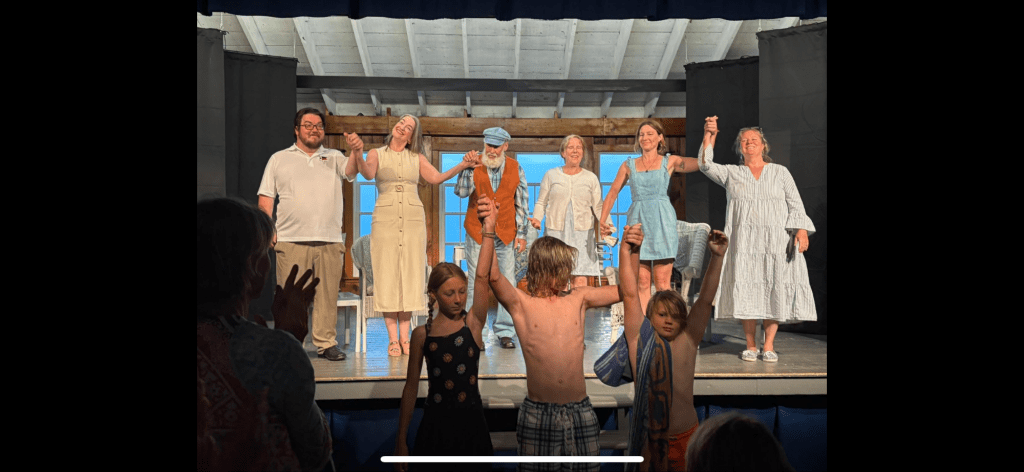
With the memory of Eleanor Morse reading outloud this very passage to an audience attending the Peaks Island Music Association Chorale, directed by Faith York, Aug 20, 2025 at the Fifth Maine Museum , Peaks Island, ME
-Desiderata-
Go placidly amid the noise and haste, and remember what peace there may be in silence. As far as possible without surrender be on good terms with all persons. Speak your truth quietly and clearly; and listen to others, even the dull and the ignorant; they too have their story.
Avoid loud and aggressive persons, they are vexations to the spirit. If you compare yourself with others, you may become vain and bitter; for always there will be greater and lesser persons than yourself. Enjoy your achievements as well as your plans.
Keep interested in your own career, however humble; it is a real possession in the changing fortunes of time. Exercise caution in your business affairs; for the world is full of trickery. But let this not blind you to what virtue there is; many persons strive for high ideals; and everywhere life is full of heroism.
Be yourself. Especially, do not feign affection. Neither be cynical about love; for in the face of all aridity and disenchantment it is as perennial as the grass.
Take kindly the counsel of the years, gracefully surrendering the things of youth. Nurture strength of spirit to shield you in sudden misfortune. But do not distress yourself with dark imaginings. Many fears are born of fatigue and loneliness. Beyond a wholesome discipline, be gentle with yourself.
You are a child of the universe, no less than the trees and the stars; you have a right to be here. And whether or not it is clear to you, no doubt the universe is unfolding as it should.
Therefore be at peace with God, whatever you conceive Him to be, and whatever your labors and aspirations, in the noisy confusion of life keep peace with your soul.
With all its sham, drudgery, and broken dreams, it is still a beautiful world. Be cheerful. Strive to be happy.
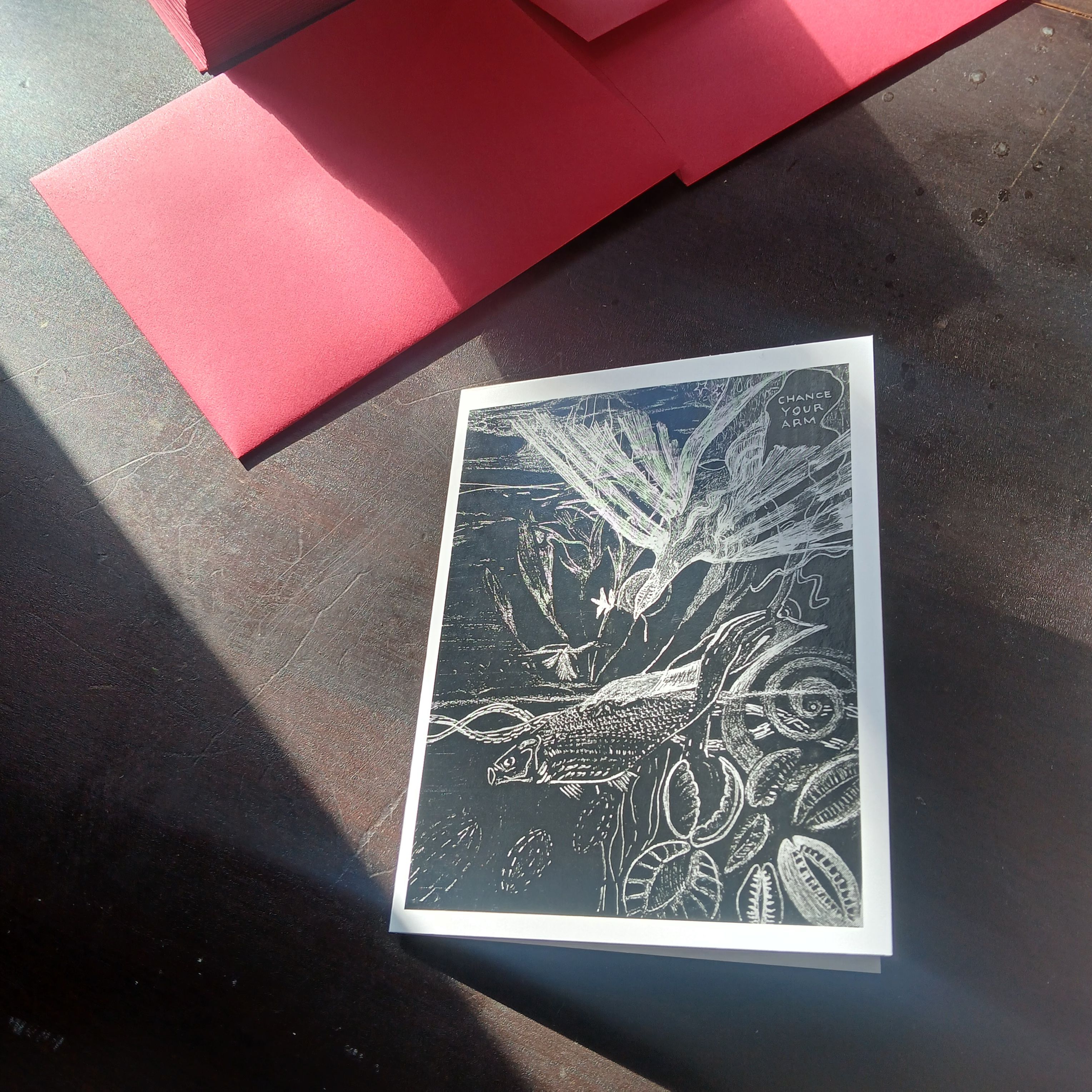
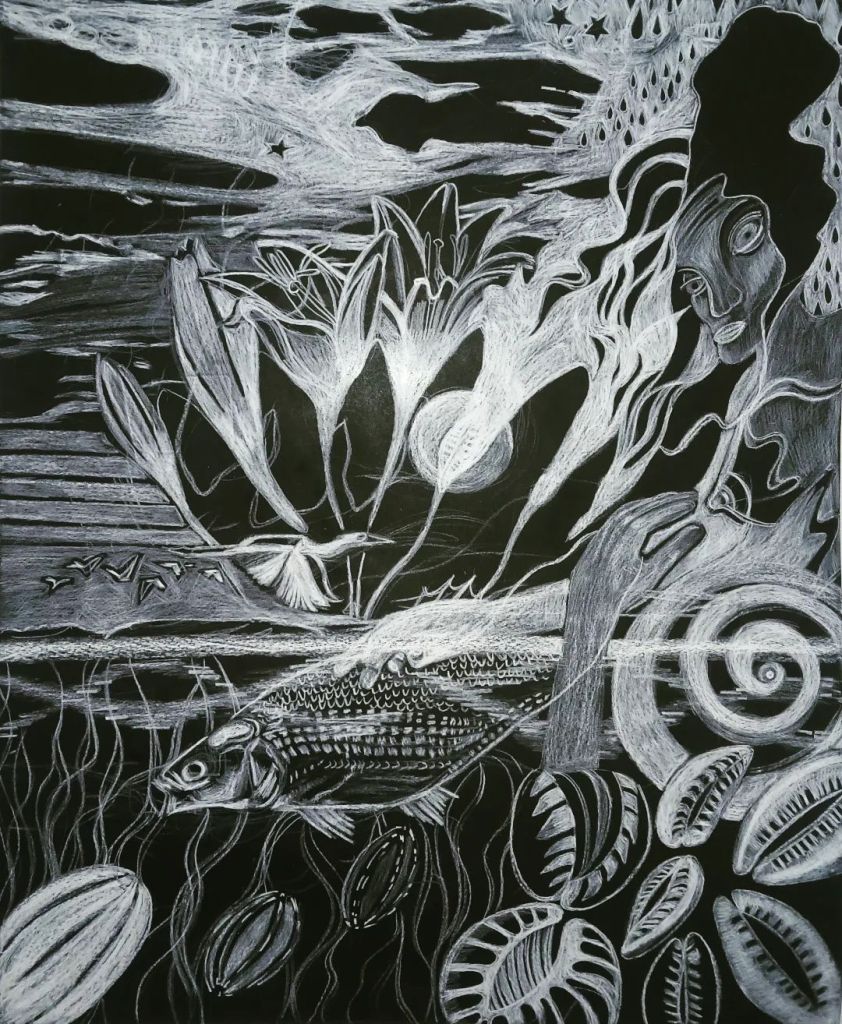
For any who read the PIN my most recent poetry landing on an island artist, Kat Farrins original poem, “small craft advisory” was greatly censored for lack of print space and to keep the focus on the poem. Also because there was the thought that i just may not look my best without censorship. Thank you to PIN for letting my landing contribute
No need to summarize anything. However, a point that is sorely missed, left on the cutting room floor, is how things( people, plants, animals) get mythologized as something other than what they really are. For the benefit of whatever personal conflict the story teller or perpetrator of conflict may have.
This is what I submitted in its uncensored form as an introductory setting.
Save a tree. Cut out this piece of paper
Kat Farrin’s easy wisdom shows here in the face of the (loudest) majority.
Her poetry strikes on a very serious form of judgement. One that destroys beauty and things that are alive. She advises that beauty ought to be considered, and some life might even die for it willingly for what comes before us eventually dies off one way or another without our efforts. Her words remind us making up rules because we think we’re more important than what already lives integrally; animals, plants other people who have survived — have an unheard or disregarded voice — are in need of an advocate — that might object to altruistic claims to manicure spaces.
Kats poem brings to mind a” government extermination campaign and predator control program” that gained hold of Yellowstone National park 100 years ago.
Wolves were mythologized as a danger, thats how the campaign gained hold. One source lets on it was a personal conflict ranchers had with wolves. For some sort of neat profit sake and attempt to control wildlife, the wolves were targeted, in the 1920’s, and eradicated from the area.
The battle cry or claim held against the wolves was they were threatening and diminishing livestock and other wildlife.
Yellowstone went 70 years without wolves. To no great good effect. It altered the structure and function of the entire ecosystem. Therein lies a prompt for question – what’s a place’s function?
Humans think they know what they’re doing, however, we have no great handle on the strength of others, plants, people or animals when we push things toward what we think are “right”.
We open up opportunities for other things – different so called evils – and usually, with humans, once our hands are in the mix, excluding things, making things “right”, it gets more extensively evil trying to tame the wilderness and alter the web of life than just co-existing, integrating with whats already growing, letting things be well enough alone to exist in their own way. I know its hard to deny the reality that some people prefer golf courses and tennis racquets. Fences.
Within the 70 years the wolves (cougars and bears as well) were eradicated and banned from Yellowstone the ecosystem did not thrive with native species. The native elk disproptionately thrived, ruined populations of vegetation, beavers became hard to find, water way contents shifted altering fish populations . So on and so forth until these began to be largely noted in 1970 by a watershed act.
You know what was put into action then that took nearly two more decades to come to fruition?
The reintroduction of wolves into the climate they once reigned in.
In 1995 fourteen wolves from Canada were brought to a valley in yellowstone and 17 the next year. They restablished their habitat and position. Their absense thwarted the healthy connections of an entire ecosystem.
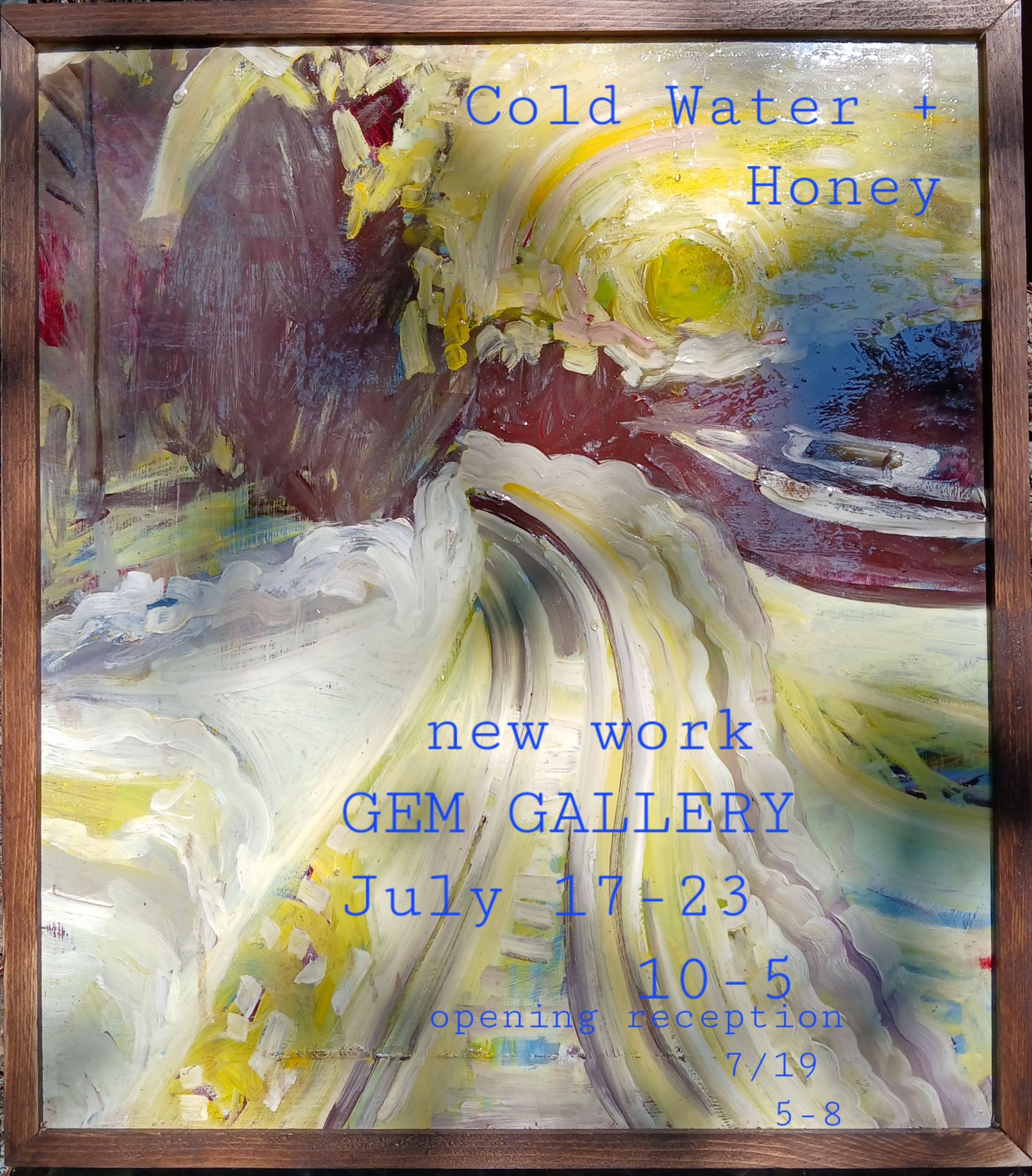
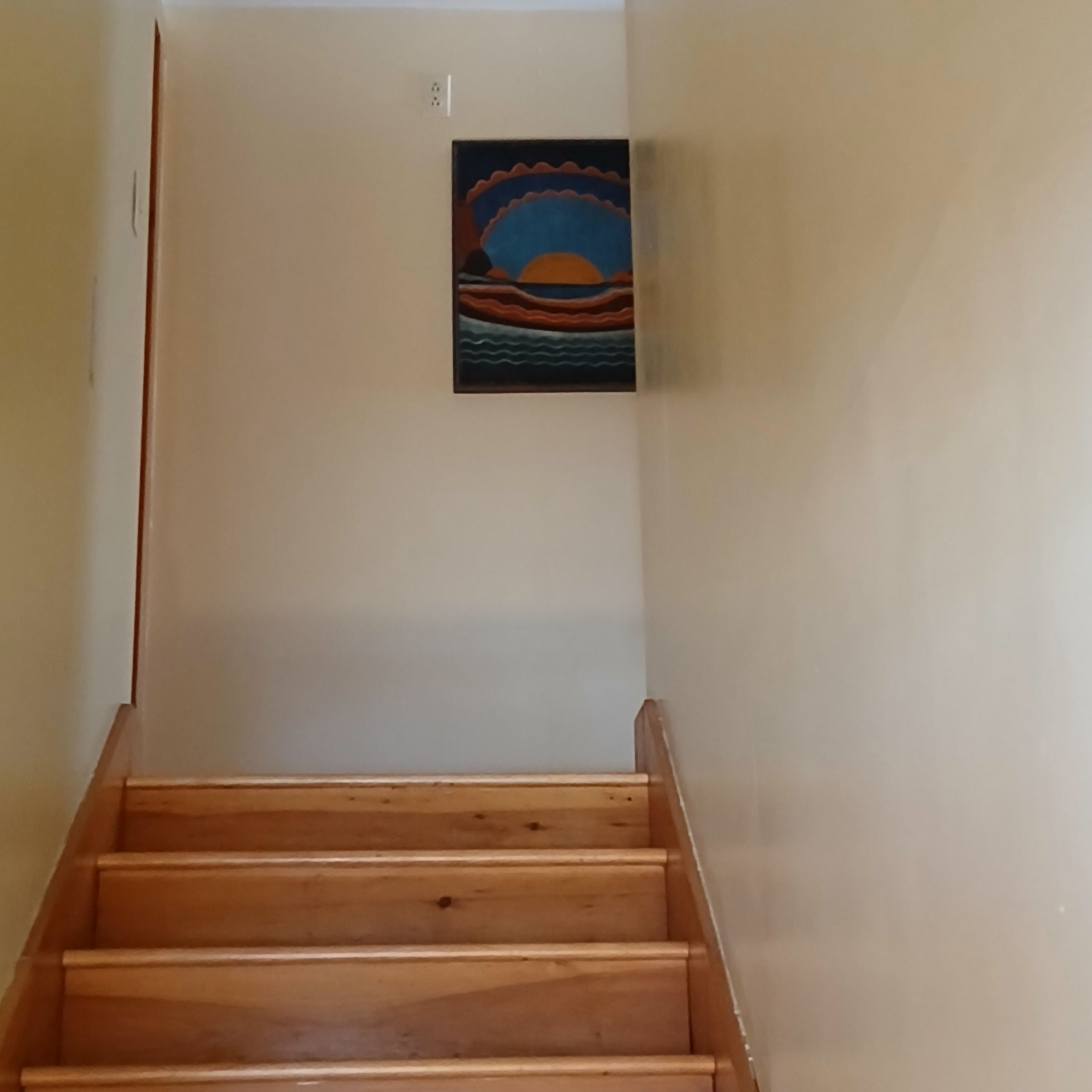
Kat, the captain of lobstering boat, Shewolf, pulled 150 traps onto her skiff for 20 years, mothered four children, and painted many aboriginal like paintings of animals and textures of wind and water on driftwood and rocks before she wrote down the following thoughtful verse. She says it so much more concisely in her poem, ” small craft advisory ” Thank You, Kat for spitting these words out.
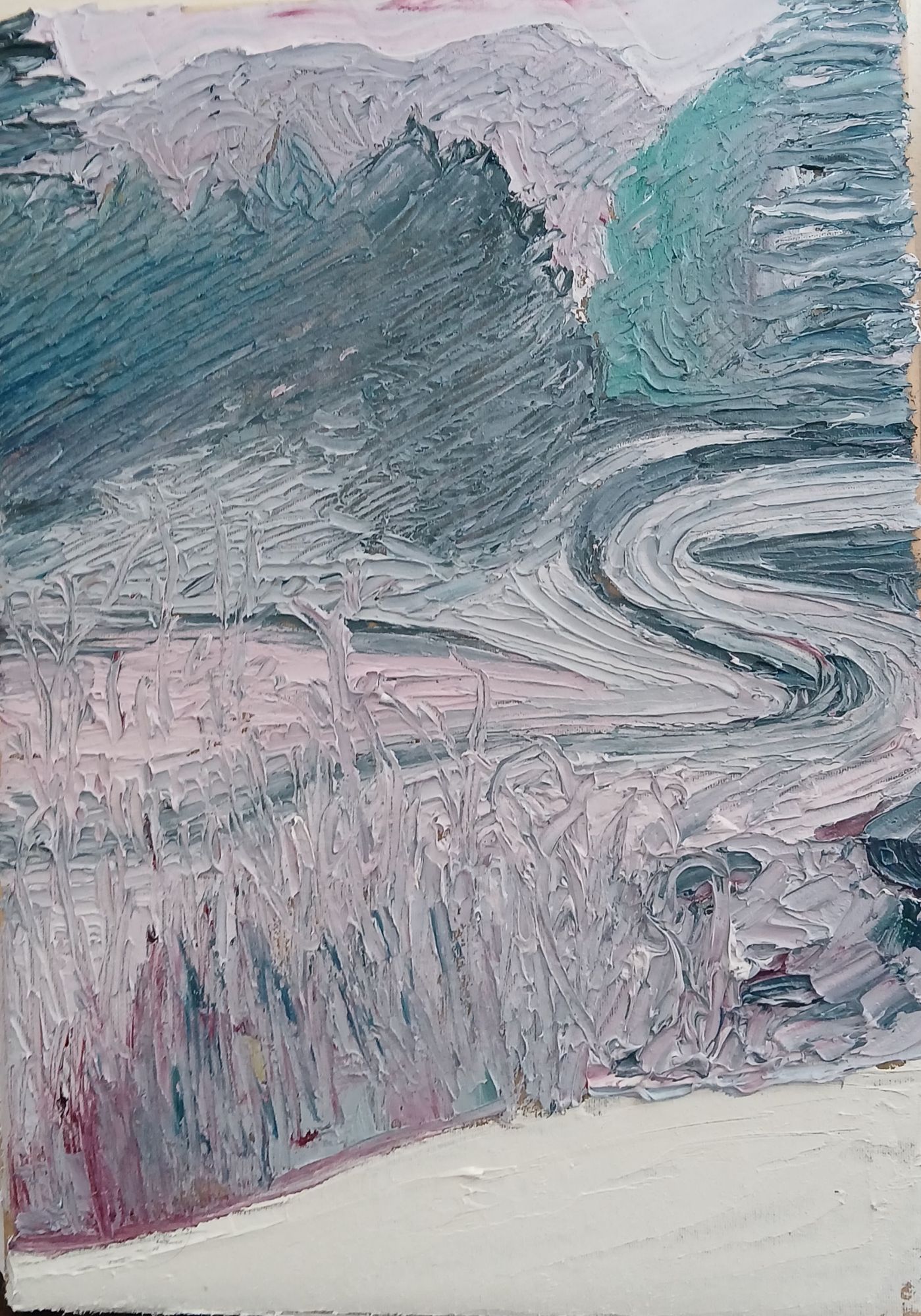
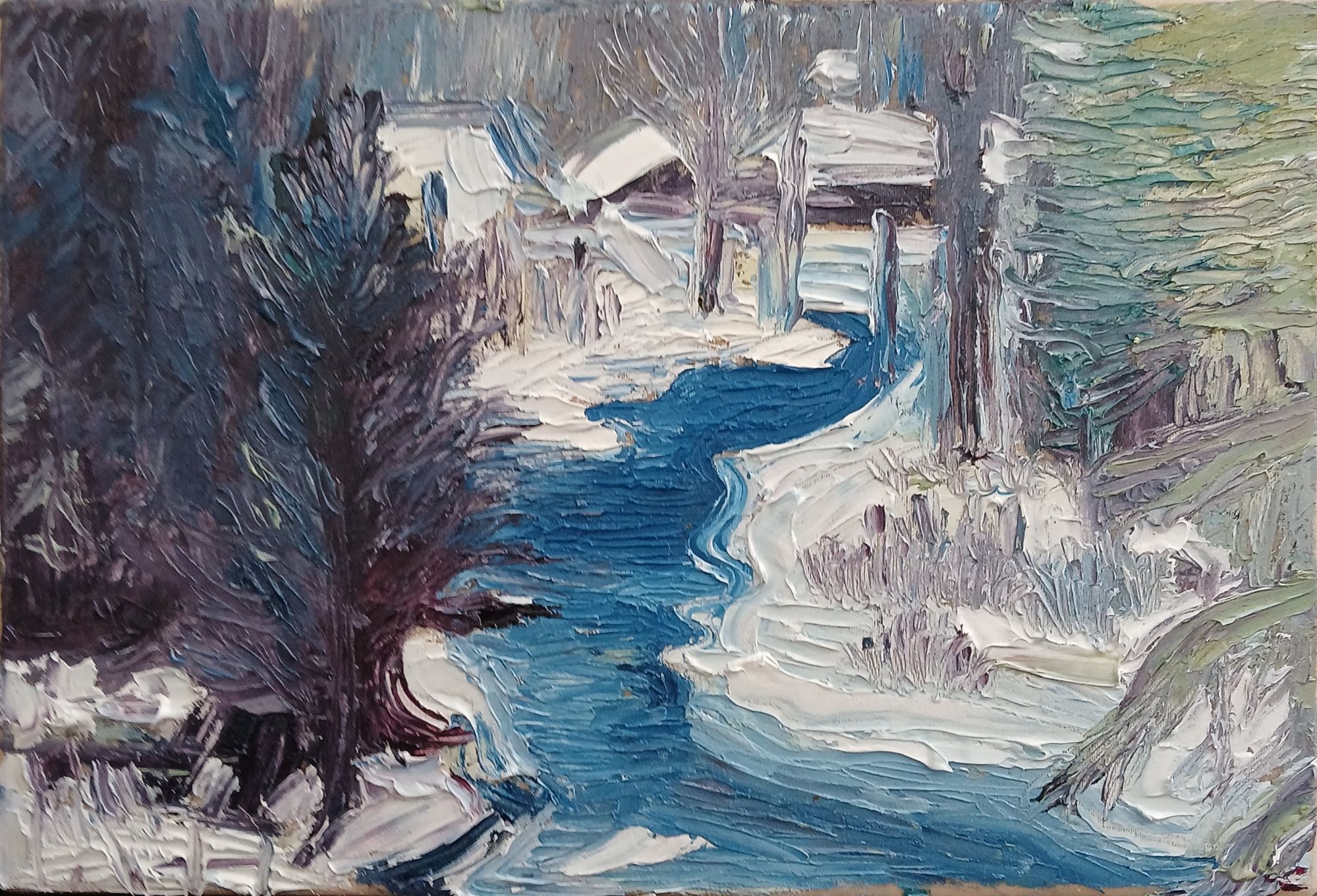
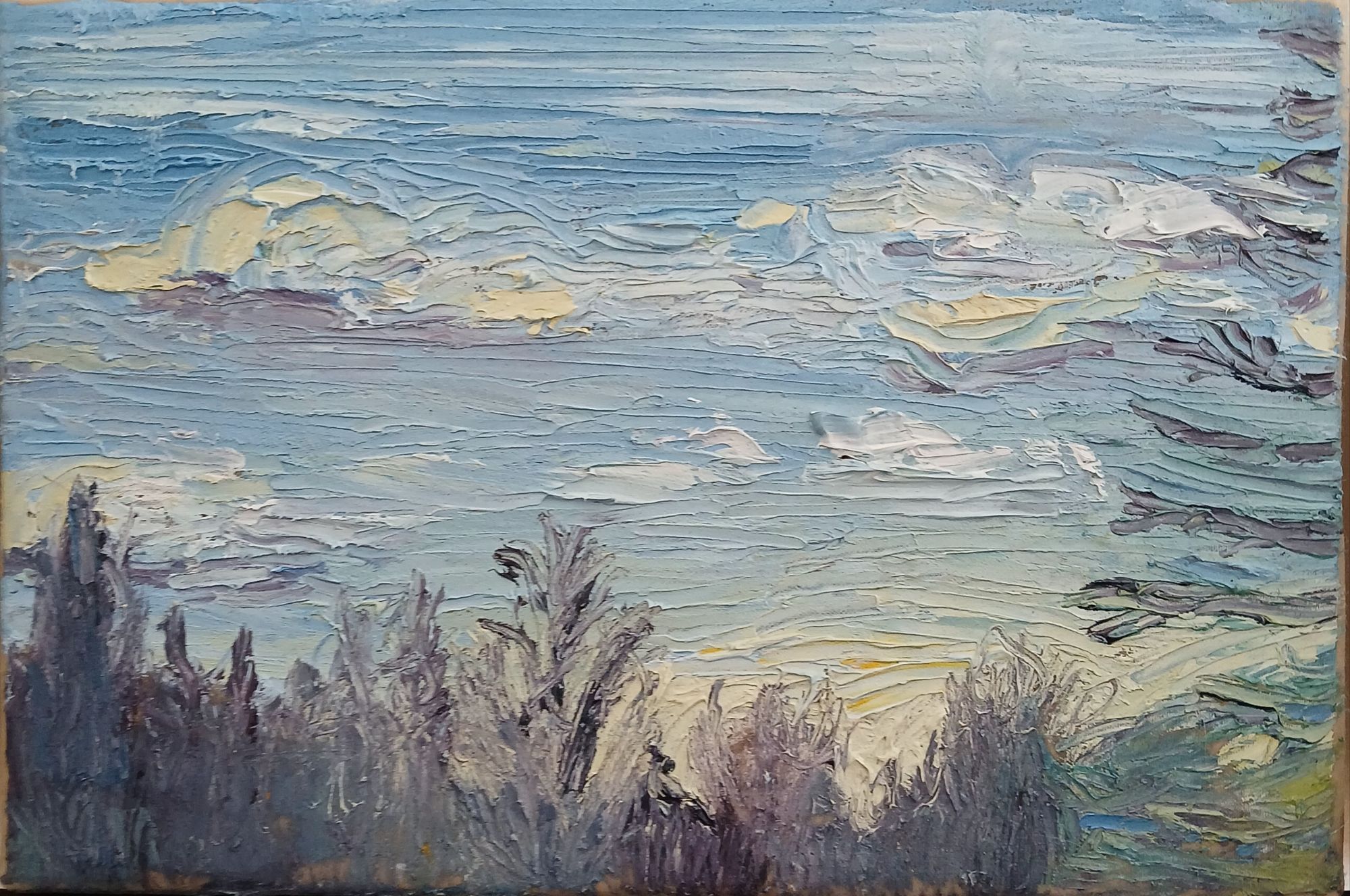
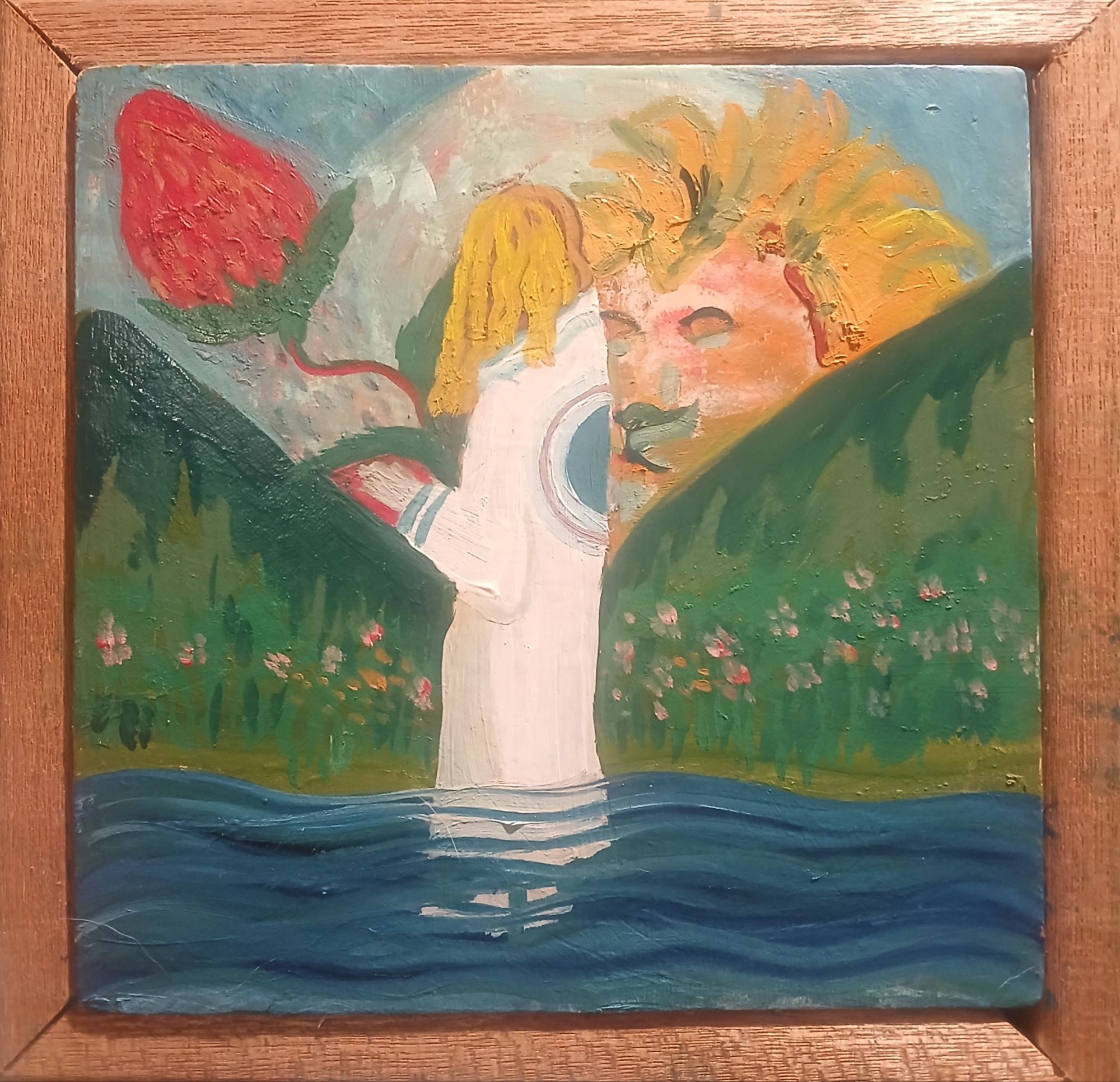
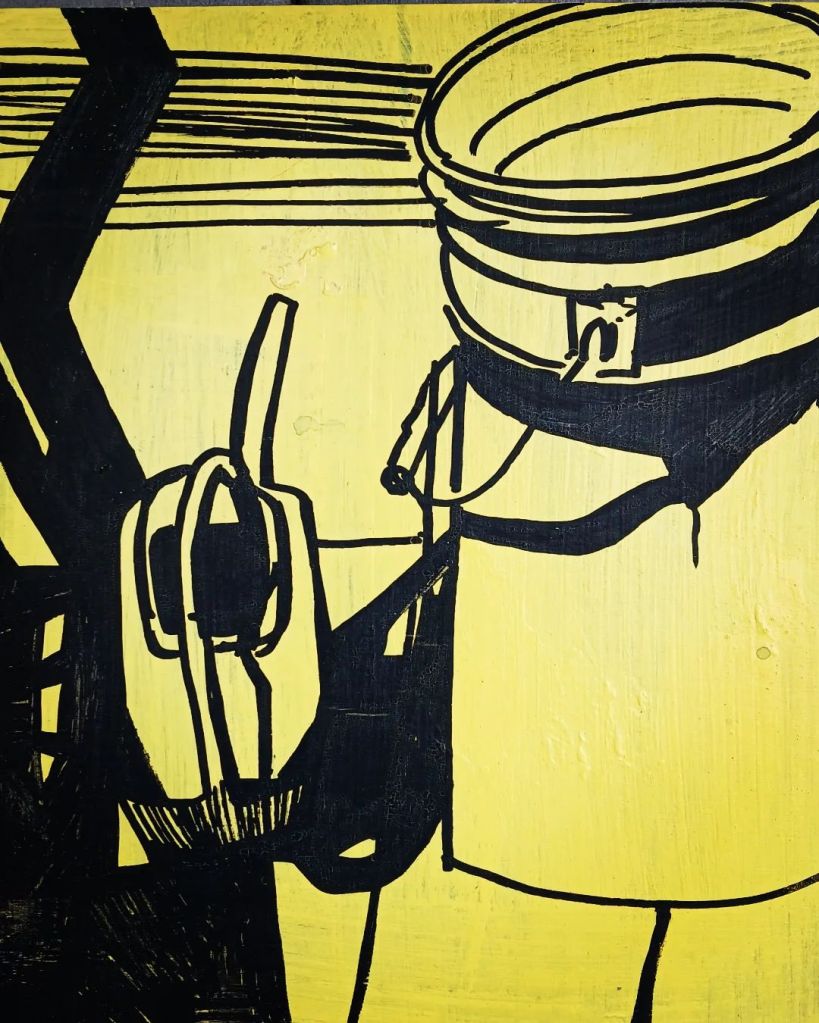
Kat Farrin is a local artist on Peaks Island, Maine, USA. These days sharing images via her observations of birds, plant life, and island landscapes on her daily walks and bike rides around the island. Often she makes paintings of the animals she sees on driftwood or rocks in an aboriginal dream time like way of pointilism . She participates in a weekly writing group and wrote a poem recently that I had the honor of being sent.
It is a windfall because Kat’s work easily invokes the voice of Peaks Island. With an authority that is easy to respect, she speaks up on behalf of the value of surviving life and beauty. The poem is called “small craft advisory” and you’ll have to wait and read it in the March Edition of the Peaks Island News.
Grounded in the earth and real things that she sees, the work she does is worthy of attention. It feels just like the antidote for the times we need. Recalling and presenting to us reminders of life all around us so we can all remember to notice how beautiful life actually is.
For another more intimate installment of admiration for Kat’s work please find
“Rude Awakenings” Making Peace with the Beast Machine by Charles A. Kniffen
Chuck writes fondly a great story of a time with Kat on She-Wolf, titled, Once in a Blue Moon. At the end of the chapter, he corrects himself, She-Wolf was powered by an eight-horse Johnson outboard. He had got the engine wrong on first recount.
In her own words, “I grew up in the small town of South Bristol, Maine, 13 miles down a peninsula, part of the town being a bridged island, Rutherford Island.
I worked a year on my brother’s lobster boat and then hauled 75 traps from my father’s tiny skiff, Bluey, for a year. After that I got my own lobstering skiff, the Shewolf, and hauled 150 traps by hand for over twenty years.
Feeling the desire for a ‘real island’ I moved to Cliff Island and lived there for 7 years, working on other people’s boats. Then I moved to Peaks Island, where like many, I have lived here off and on for years. While on Cliff, I got a master’s degree, independent study, from Goddard College in writing and art.
I am very grateful for my four children and for nature, which to me is the great out doors, or god, and which somehow I seek.. through writing, taking photos, and through painting… often, but not always on wood drifted to shore.” Kat Farrin





























 True Blue Island