-
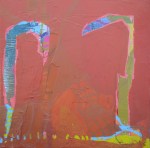
- 3/4
-
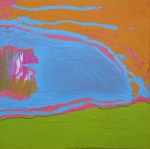
- 2/4
-
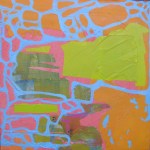
- 1/4
Archive of Jessica Townes George
He took the words right out of my mouth!
60.
I enrolled in a class in mushroom identification.
The teacher was a Ph.D. and the editor of a
publication on mycology. One day he picked up a
mushroom, gave a good deal of information about it,
mainly historical, and finally named the plant as
Pluteus cervinus, edible. I was certain that that
plant was not Pluteus cervinus. Due to the
attachment of its gills to the stem, it seemed to
me to be an Entoloma, and therefore possibly
seriously poisonous. I thought: What shall I do?
Point out the teacher’s error? Or, following school
etiquette, saying nothing, let other members of the
class possibly poison themselves? I decided to
speak. I said, “I doubt whether that mushroom is
Pluteus cervinus. I think it’s an Entoloma.” The
teacher said, “Well, we’ll key it out.” This was
done, and it turned out I was right. The plant was
Entoloma grayanum, a poisonous mushroom. The teacher
came over to me and said, “If you know so much about
mushrooms, why do you take this class?” I said, “I
take this class because there’s so much about
mushrooms I don’t know.” Then I said, “By the way,
how is it that you didn’t recognize that plant?” He
said, “Well, I specialize in the jelly fungi; I just
give the fleshy fungi a whirl.”
the purpose of purposelessness.
one of the most interesting parts of this lecture is the other noises that enter into listening to the sounds of cage’s voice and composition. Allen in his studio tap tap tapping, kids talking nearby, fish tank filtering water, bird chirping outside, running water, pots clanging in the kitchen etc…
Homecoming
– to my Kinsfolk
1.
It is still bright night in the Alps, and a cloud,
Authoring joyfulness, covers the yawning valley.
Playful mountain breezes rush and toss about, and a ray
Of light shines abruptly through the firs and disappears.
Chaos, quivering with joy, hurries slowly to do battle.
Young in form, yet strong, it celebrates a loving quarrel
Among the cliffs. It ferments and shakes within its eternal
Limits, for the morning accelerates in ecstatic dance.
The year advances more rapidly out there, and the holy hours,
The days, are more boldly ordered and mixed.
A storm bird marks the time, and stays high in the air
Between the mountains, announcing the day.
Now the little village awakens down below. Fearless,
Familiar with the heights, it peers up beyond the treetops.
It senses the growth, for the ancient streams fall like lightning,
And the ground yields fine mists under the crashing waters.
Echo resounds, and the vast workplace flexes its arm,
Sending forth its gifts, by day and by night.
Let us begin our search for the essence of art with an essay entitled “Remembrance of the Poet” {[5], pp. 233-69}, first published in 1943. It is an analysis of Holderlin’s elegy “Homecoming.” (12) At the narrative surface, “Homecoming” tells the story of a man who returns from his youthful travels to the town of his birth, his home. He sails across Lake Constance and out of the shade of the Alps to the little town, where he finds familiar places and congenial faces. As Heidegger saw it, “Homecoming” tells a deeper story of a poet who is finding thesignificance of his homeland and, hence, of home itself. Holderlin considered the poet to be specially tempted to journey into distant lands and, because of that, to be specially prepared for a homecoming. Afterall it is the traveler who can place his “home” in the widest context of where and how people live.
Heidegger found the rudiments of a theory of art in this poem because he conceived of the poet’s journey in life as wholly a matter of “homecoming;” the essence of home is the general subject of poetry. Human life itself is wholly involved in the issue of finding “home;” life “really consists solely in the people of the country becoming at home in the still-withheld essence of home.” {[5], p. 245} That essence is never obvious to us and, usually indeed, we must leave our homeland and return before we can ever discover it. Nor is the discovery merely in seeing old and familiar places. Home is not the people and the place; merely coming into the homeland is not enough. “Homecoming is the return into the proximity of the source ..[but].. proximity to the source is a mystery.” {[5], p. 258-9} We will never quite know what home is; but home is the essence of our being on the earth and that toward which we should work in our lives. In the poet’s writing we can share the poet’s vision of this human quest.
Reminded of Anatefka, Fiddler on the Roof, Tevye, Tradition…
am i lost, am i out of place? what is my direction? what is this direction going towards? what is it going away from ? if i dont know what specific direction i am going in is it enough to just say i am going up and that i came from being down? how specific a direction does one need to have? it is this question of specificity that emerges when i attempt to relay my personal direction to another. it is here that directions become complicated because if you want to move together — or to arrive in the same place at the same time — you need to be succinct in your direction to explain where it is you are going and coming from. the other person will not be able to follow if you can not relay this information discretely. so it is in the presence and necessity to move with another that vague directions such as up or south or this way or that way are insufficient. it is only with clear explanation of your own direction and an understanding of another’s direction that movement together becomes possible.
Heidegger describes our relationship to technology in a manner similar to how Deleuze describes our human relationship to islands:
We are to understand technology through enframing in two very important ways. First, technology is a process, or coming-to-presence, which is underway in the world and which has truly gigantic proportions. The two concepts that Heidegger used as analogies in arriving at the word ‘Ge-stell‘ were ‘Gebirg” and ‘Gemuet.’ Both of these are processes of cosmic scope. The former is the gradual building, emergence, folding, and eroding of a mountain range. The latter is the welling up and building of emotional feelings that originate in the depths of our beings, as differentiated from the simple emotions that arise quickly and spontaneously in normal contexts. Second, technology viewed as enframing is a process that is shaping human destiny today and that has been shaping human destiny in relation to the universe for almost as long as we conceive of our history. What we call technology and think to be a neutral instrument standing ready for our control is actually a specific manifestation of this whole process. {[7], p. 19} The concept of enframing suggests that human life in the context of the natural world is gathered wholly and cosmically within the essence of technology. Just as the technology that we now see ongoing in the world shows the characteristic of challenging-forth the objects around us, the whole process within which human life is developing challenges-us-forth to this mode of revealing the real or of ordering nature into standing reserve. Our control over technology is an illusion; it and we alike are being shaped, like an evolving mountain range, in the process that Heidegger called enframing. The possession of what we commonly call technology is only a fragmentary, though characteristic, aspect of that whole development; language thought, religion, art, and all other aspects of human life are coordinated into this development as a part of enframing.
Just as humans have progressively limited the being of the natural objects around them, Heidegger observed, they too have acquired a progressively limited character or being. While we have come to think that we encounter only ourselves in the world, “in truth, however, precisely nowhere does man today any longer encounter himself, i.e., in his essence.” {[7], p. 27} While all epochs of human evolution contain danger, the epoch of modern technology possesses the gravest danger because it is the epoch whose characteristic is to conduct humanity out of its own essence. Modern technology, in Heidegger’s view, is the highest stage of misrepresentation of the essence of being human. Tad Beckman
Modern technology puts nature in reserve. (oil tanks) by using technology to put nature in reserve we are putting our own lives in reserve.
Art is not what makes the turning away from technology possible or necessary; it is rather proposed as the form of revealing through which we may be conducted out of that epoch.
It is therefore an essential kind of human awareness that brings us into relation with the nature of our being as human beings who dwell on the earth through that specific recognition and understanding of objects and their relations that they call their world. Clearly, art in general, like poetry, is a uniquely vital journey into the basic human issue of finding the essence of home within life on this earth.
Joy comes from Serenity and Serenity is the “spatially ordered”
There are two different types of islands. Originary and Continental. Continental islands have drifted away from a continent or main land, and originary islands have punched up through the ocean ( The constructive nature of a growing coral reef or compiled and consolidated mass of sediments.)
All islands are considered deserted as a philosophical view (see deleuze) even if they are inhabited by humans and other species. In the most ideal philosophical thought, humans can only inhabit deserted islands if they are sufficient and absolute creators.
Humans which come to live on islands, in turn, give islands a “dynamic image of itself” by becoming a consciousness to the movement which produced the island (continental or originary). THrough human inhabitants, islands become conscious of themselves as deserted and unpeopled, which we as humans know is not a reality but is still a valid consciousness of an island. (an island, in western thought, being an inanimate object and therefore unable to posess a consciousness only granted to animate life.) looking at indigenous cultures and non-western traditional thought one begins to uncover this understanding of land is inaccurate and a production of capitalism. the island does have a consciousness produced by a movement. the people are not the islands reality and are seemingly only a dream since islands believe they are deserted and unable to sustain people in a … sense. thereofre, making of the island is only the dream of humans and a pure consciousness of the island. this can be concluded when one reduces themselves to the movement which brought them to a place (an island).
humans on islands can do the opposite of what the island did. they can create on one that has drifted away and they can drift towards one that is originary.
(the human can move in the opposite way the island did exist in their place. a human may drift to an originary island and an island which in western thought, makes not sense of having a consciousness.)
“human beings live there already, but uncommon humans, they are absolutely separate, absolute creators, in short, an idea of humanity, a prototype, a man who would almost be a god, a woman who would be a goddess, a great Amnesiac, a Pure Artist, a consciousness of Earth and ocean, an enormous hurricane, a beautiful witch, a statue from the Easter Islands. There you have a human being who precedes itself, insofar as it imagines and reflects itself in its first movement.”
“It is not enough that everything begin, everything must begin again once the cycle of possible combinations has come to a completion. The second moment does not succeed the first: it is the reappearance of the first when the cycle of the other moments has been completed. The second origin is thus more essential than the first, since it gives us the law of repetition, the law of the series, whose first origin gave us only moments. But this theme, even more than in our fantasies, finds expression in every mythology.” p.13
“In the ideal of beginning a new there is something that precedes the beginning itself…” p.14
2.8.09
Minutes
I Sylus conversation / movement to stillness (O is the voices moving until they are moved to be still)
Chatter, language, translation, understanding, communication, coersion, relaxation, comfort, reassurance, repetition, song.
Hours
O Rubbings / stillness (O is still)
Sticks, ice, bark, buds, grass, ground, stones, leaves, nettles.
I Sketching / stillness (O is sleeping)
Sleep, comfort, coziness, children, lovers, dream.
O Plein air / movement (O is moving)
Ocean, tides, rocks, algae, coast, foam, waves, sky, horizon, islands, submerged, breaking, emerging.
Days
O Spray paint + masking / movement (I am moving and O is moving)
Trees, roads, hills, bushes, branches, piles, sky
O Drawing / movement (O is moving)
I Drawing / stillness (O is a photograph)
Landscape, Cole, stopped, moment, trees, sunlight, dirt, leaves, shadow, depth, Peaks Island, preservation, documentation
Weeks
O Place painting / movement (I move and O moves)
Peaks Island, beach, beaver dams, woods, the edge…
I Nights / stillness (O looks still through my window)
Layering, subtleties, trees, shadows, light, shifts…
I Blocks / movement (My memory moves O in my memory)
Layering, shapes, through, over, above, inside, around, in between, all over, through out, emerge, re-emerge, come together.
Months
I Month Painting / movement (My mind moves for O to show itself)
Layers, mix, window, searching, pattern, one, inspired, spontaneous, planned, square, in, circles, stop, dry, start, remove, obscure, add, next, again, mask.
Seasons
Warm
(O is moving)
(I am moving and O is moving)
(O is moving)
(I move and O moves)
(My memory moves O in my memory)
(My mind moves for O to show itself)
Cold
(O is still)
(O is sleeping)
(O is a photograph)
(O looks still through my window)
(My memory moves O in my memory)
(My mind moves for O to show itself)
Years
I Conversation about Sy.
“…” indicates more to come
O is The Outside and The Object
I is The Inside
Petia’s visualization class
The MET – Rubens, Ruisdal, Turner,
The Cloisters – cloaks, head dress
John Cage Lecture on Nothing
Content is poetry. Poetry is a creative act which uses language. My paintings are a language interpreted through the landscape by looking.(i.)structured in a system of painting (ii) the context (landscape) where the marks are inspired from (pragmatics) and (iii) dependent on their context the content specifity, i.e. its meaning (semantics).Petia’s visualization class
Here we are now at the beginning of the fourth large part of this talk. More and more I have the feeling that we are getting nowhere. Slowly, as the talk goes on, we are getting nowhere and that is a pleasure. It is not irritating to be where one is. It is only irritating to think one would like to be somewhere else. Here we are now, a little bit after the beginning of the fourth large part of this talk. More and more we have the feeling that I am getting nowhere. Slowly, as the talk goes on, slowly, we have the feeling we are getting nowhere. That is a pleasure which will continue. If we are irritated, it is not a pleasure. Nothing is not a pleasure if one is irritated, but suddenly, it is a pleasure, and then more and more it is not irritating (and then more and more and slowly). Originally we were nowhere; and now, again, we are having the pleasure of being slowly nowhere. If anybody is sleepy, let him go to sleep. John cage
Liberating the Ineffable and Unfathomable
Painting: A Refuge For the Ineffable.
Painting: An essential nutrient to the preservation of a significant ecology cultivating reciprocity and knowledge of a temporally wild and multiplicitous otherness.
A True Justified Belief in Painting:
Painting’s Use as Technology: Qualitatively Collecting and Producing Evidential Knowledge of a Landscape.
Integrating Evidential and Non-Evidential Information To Have A More Attuned System of Knowledge.
A Technology to Organize the Knowledge of an Inner and Outer Landscape
[evidential reasoning, evidential information]
evidential information – i.e., information that is to some degree uncertain, imprecise, and occasionally inaccurate.
The information technology (IT) of painting applied to the landscape for knowledge management (KM).
the range of information technologies are said to capture, store, retrieve, transfer and apply knowledge. Action research, with its emphasis on praxis and on the importance of ‘situated, practical theory,’ is an ideal vehicle for deepening PAINTING’s field of understanding of the design of experiments Knowledge Management Systems for use in with the landscape / inside or outside the studio.
“The South Node in Virgo represents a Virgoan bias toward empirical means of gaining knowledge, and a resistance to the Piscean intuitive, numinous, consciousness-expanding tools for knowing.” lisa dale miller
“Virgo rules the body; Pisces rules the transcendent mind and deep psyche. Virgo is classical physics; Pisces is quantum physics. Virgo is healing the body with medicine, surgery, healthy lifestyle habits, and diet; Pisces is healing the individual and collective soul or psyche through energy medicine or the development of consciousness itself. Virgo is engineering and technological advancement through research and development; Pisces is the flashing, intuitive brilliance of revelation and abstract mathematics. Bring together the Virgo/Pisces duality—the mind/body connection—and you get the total spectrum of inner and outer knowledge. Mistakes are made when how we gain knowledge arises from a need to unnecessarily favor one to the exclusion of the other.” lisa dale miller
Retrospection
Resonance
Patterning
Islands – originary
Cartographic
Autoethnographic/Ethnographic/Anthropology
Multiple Perspectives
Poetic
Itinerant (in context of others)
Cosmologies
Magic/Shamanism/The Ineffable
Art Brut/Outsider Art vs. Institutionalized
seeking new (as yet unfound) solutions/utilities for research and technology
engineer (work with what you got)
augmented vision vs. native sight capacity (contacts, glasses, night vision goggles)
a lie vs. a truth
texture vs. flatness
qualitative vs. quantitative
inside vs. outside
hyper-detail vs. abstract
devoid of humanness vs. humanness
figuration vs. abstraction
RHODE ISLAND
GRAFFITI
ORGANIZED ORGANIC (MATTER)
TECHNO-NATURAL
COMMUNICATIVE-PAINTING TECHNOLOGY
technology is not merely the result of scientific research.
Bernard Stiegler, in Technics and Time, 1, defines technology in two ways: as “the pursuit of life by means other than life”, and as “organized inorganic matter.”[

 True Blue Island