Falling Asleep around Midnight at the end of June after searching out La Luna (clouded) on the back shore
June 29, 2010Fallen
Falling
Fell
Felt
if nobody wants anything
Does nothing happen?
BRAUTIGAN (killed himslef)
Survived by his 20 something year old
daughter who knew he wanted to die since she was 9.
ARE/OUR
ISLAND ROMANCE
IS NOT like Harper’s Island.
NO GHOSTS
OR HIDDEN RELATIONSHIPS
OPEN UP.
Trying to Direct a Crane to Come Out This Way.
June 24, 2010Starting with a square piece of paper make a triangle (one way) with color/pattern folded inside. Open and make a triangle (the other way) with color/pattern on the folded inside. Open up to a creased X visible and fold into a rectangle with the color/pattern on the outside. Open and fold a rectangle the other way, keeping the color on the outside.
Now you have a square, color/pattern facing up, with 8 triangles between the folds. Grab each side of a rectangle fold and push the middle up and together to make a square diamond. This is tricky to describe. Everything must get folded into itself. The top becomes the body and the bottom stays open. You fold the bottom, one side at a time, into the middle crease. Then you flip it over and fold into the middle crease on the other side. Now it looks like a kite. Fold the top of the kite down over one side to make a crease and then put it back to looking like a kite.
This next part is the most difficult. You must unfold/open one side up, pull it out, and fold it down into a long diamond.
The same with the other side. Now there is a long rhombus/diamond with legs that move and a top that stays still.
Make the legs skinnier by folding them in close to the middle crease. Then tuck the leg up into its side, but not all the way. Line it up with the outside. Do this to both sides.
On one side you fold a tiny portion down to make a head and the other side is the tail. Open the wings up and expand the middle to make it sit up.
It took Elise (an experienced crane maker) making four or five consecutive cranes with me to get it programed into my muscle memory. She is good at directing one to fold, and half of these words she surely said in the process of showing me yesterday. No way is this (post) the appropriate means for directing the becoming of a crane. One needs an actual present teacher and responder to their folding. There is constant correction as one begins to go through the steps. Trying to write out a recipe for others to use sans direct interaction fails! This post intends to fail. There shall be no cranes to come in response.
However, if you come to 157 High St. There is now an assortment of colorful cranes in x to give away with visits and purchases, and there is someone to show you how to make one! Elise left us some paper!

momentarily Expired
June 23, 2010jessicageorge.org is down until i can re-new the domain. digital camera has mal-functions due to me leaving it out in the rain. painting is slowly progressing due to summer start and city callings.
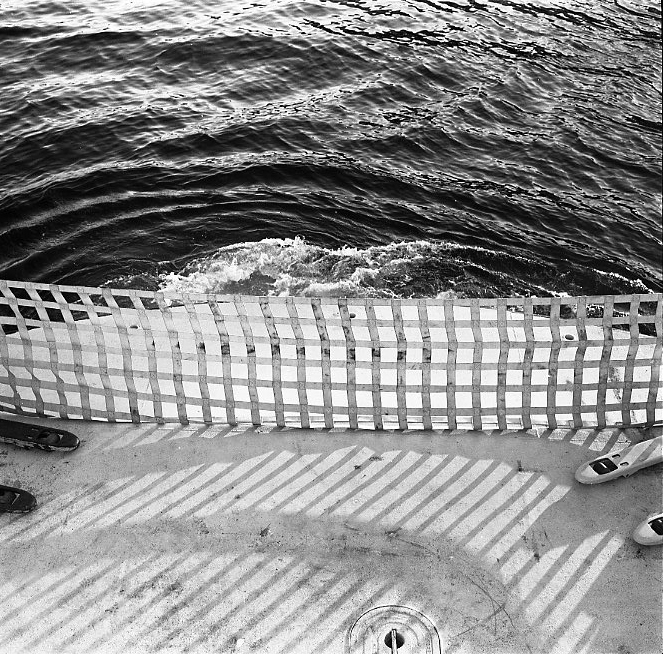
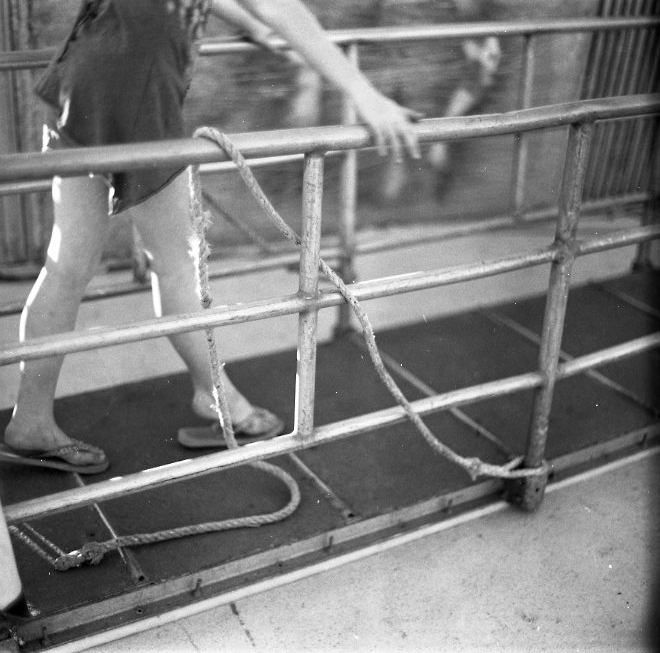
here’s a quick view of some norita newness. B&W film — is easy to develop at home and in town now! — scans are easy to show and can emerge even when expired.



Parker’s Book
June 12, 2010List of Photographs
1. Pigeon
2. Garden of Shrubs
3. New Ivy
4. Feather
5. Seagull
6. Human, male/female
7. Seagull – Trash eater
8. Habitat
9. Domesticated canine with human
10. Pair of Pigeons
11. Pigeons in Habitat
12. Human Activity / Surf Shop
13. Prickly Bush
14. Human Interaction
15. Transportation
16. Feet with Feather
17. Observer


Can I Get A Witness?
May 8, 2010Listening to “Someone Else’s Song” makes me want to sing and write a melody. It makes me want to author something similarly enjoyable, but sprung from my own well. Of late, in viewing my work, questions of my authorship have arisen. Sometimes i by-pass or give away authorship to encompass ideas other than my own or to shine light on things that hold my attention. These are things that are not birthed by me, rather stumbled across due to what one might consider good timing and looking. Perhaps, i imagine i have good timing and really i should focus on my own beat, but how hard it is to ignore the rhythms being made — by others — all around!
As i catch myself thinking about these things, imagining my good fortune to be actual and the random beauty i encounter to be real, i begin to wonder how and why i need to differentiate between something that is an influence and something that is “purely” my creation. To separate the question of authorship into my own and others — outside and inside — seems very clear and very opaque at the same time. Yes, my hands made this, i was looking at something outside of myself, but it filtered through my insides. Yes, my hands made this, i was thinking about something inside, and this is how i chose to mediate that thought.
Getting caught thinking like this, evaluating whether something impacted my results or whether i alone impacted my results makes me cringe. How impossible it is to claim that I ALONE DID THIS. We all aspire to be self reliant and DIY is all the rage, but we never can really get the whole process to be made by our hands alone. Someone else makes our materials, something/one else delivers insight, light shines to present things we never saw before, we are not islands and homogeneous authenticity seems to be a dream.
My attempts to be authentic, to put something of myself out there is questionable, although it is what i am constantly striving to do. What i mean by questionable is that how can ever one really produce something without questioning where it came from? I find things inside i want to hide, and i filter parts of me i want to use out to a distilled form. By no means am i censoring myself, but i am totally watching what comes out closely and removing parts that i don’t want to show.
I find most things inside are constantly touched by whats happening outside of me. I try to claim authenticity and end up whispering uncertainly; does the water not get credit? the light? the atmosphere of where i stood, the direction i looked, the rocks? the people i was with? When is it JUST me? I think about someone like Forrest Bess and how he did not feel responsible for his work, how he felt he was simply a conduit. He painted “ideograms” — visions he saw on the inside of his eyelids — and lived a solitary existence painting on an island off of Texas as a “visionary”, a supposed translator of his unconscious. This kind of artist intrigues me as sometimes i believe i can or i want to create images similarly, but i don’t see things on the inside of my eyelids. Things are too puzzling for me for that type of painting and i question what i remember and what i have seen too much. I feel responsible to what i have witnessed. I may evaluate inaccurately, forget important details or become adamant about inconsequential parts, but I don’t lie, and i do believe new significance is created simply by admission of a view.
Opening up my practice into larger spaces (coming from the smallness of a home, a studio, an island) and trying to retain that smallness is the motivator to expand. Not being able to disentangle things is native to tight spaces. This is how it feels inside me when i think about where what i make comes from — uptight. Surely this is not an individual feeling, getting right back to being in-authentic. We are constantly doing battle with our small spaces and trying to let loose. It’s in attempt to manage these interior spaces and carry on without dragging that i make things, i paint, i take a picture, i look around me, i let something out, or let something in that will loosen me up.
Last week i was fearful and fretting about how i might keep dragging, how i might not be able to pick it up. However, there’s nothing like a good quick phone conversation driving north in the car with an old friend to have them remind me, “Yeah, but you work well under pressure. You’re funny in tight spots” I replied that I’m unpredictable, i mean I don’t even know what i’m going to do next. The simple confidence of a friend, a nudge from the outside, was a calming and helpful affect on my insides. Thank You Mary Anne. How can I not be moved?
Colors by Cultural Emotion
April 28, 2010
Painting To Be Completed:
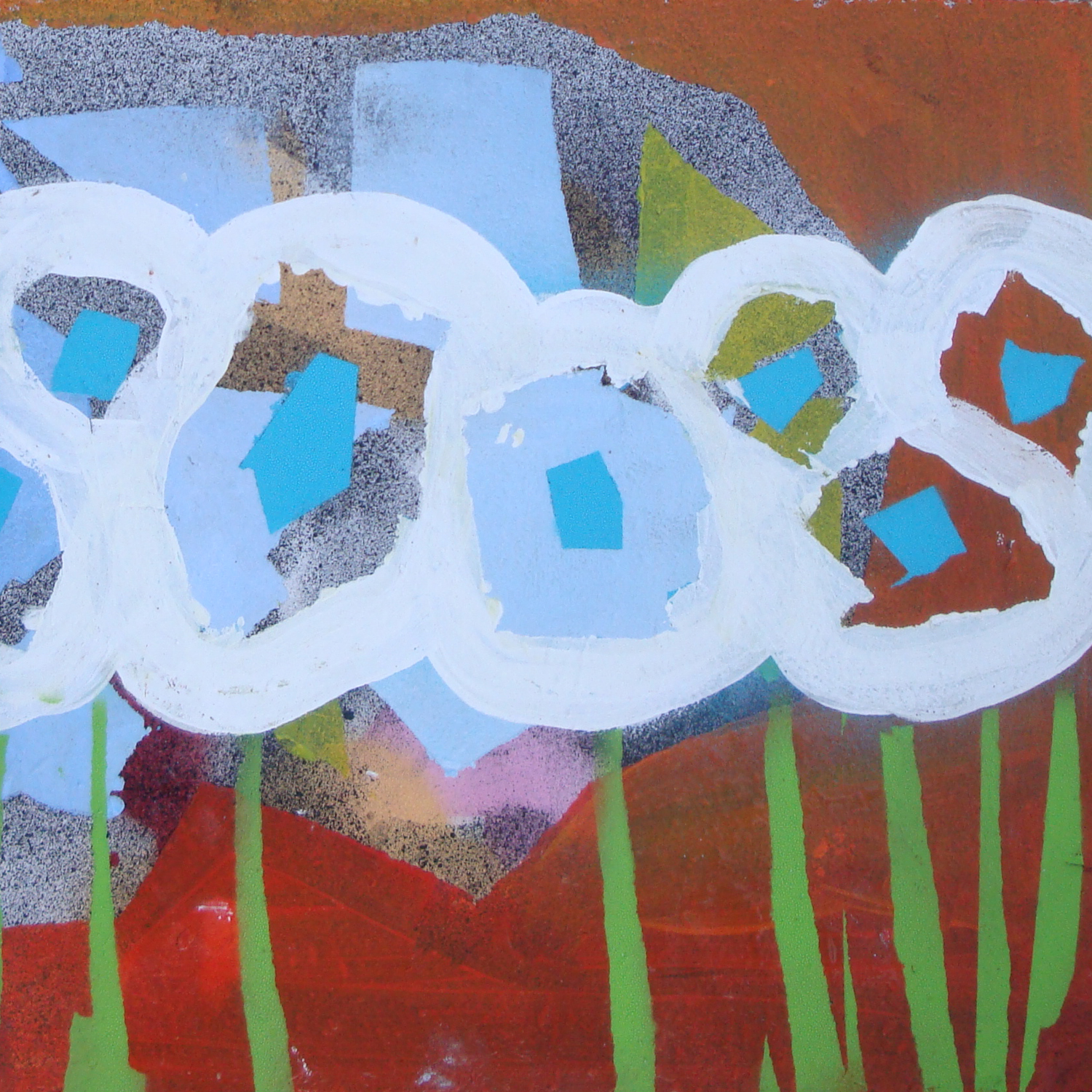
April 23, 2010*Logo Tapestry
*Kites
*ICE CUBE STUCK
*Consignment Forms email
*WHITE INTERIOR WALLS

For Help With Nostalgia
March 22, 2010Re-read.
I still don’t know if its better to just live with it or get over it, but in the best interest of newer objects of affection, one might consider getting over it. Also consider what utopias may be other than fantastical unsustainable ideals. Are they highly designed escapes?
Read again:
“Nostalgia is a sadness without an object, a sadness which creates a longing that of necessity is inauthentic because it does not take part in lived experience. Rather, it remains behind and before that experience. Nostalgia, like any form of narrative, is always ideological: the past it seeks has never existed except as narrative, and hence, always absent, that past continually threatens to reproduce itself as a felt lack. Hostile to history and its invisible origins, and yet longing for an impossibly pure context of lived experience at a place of origin, nostalgia wears a distinctly utopian face, a face that turns toward a future-past, a past which has only ideological reality. This point of desire which the nostalgic seeks is in fact the absence that is the very generating mechanism of desire. As we shall see in our discussion of the souvenir, the realization of re-union imagined by the nostalgic is a narrative utopia that works only by virtue of its partiality, its lack of fixity and closure: nostalgia is the desire for desire.
The prevailing motif of nostalgia is the erasure of the gap between nature and culture, and hence a return to the utopia of biology and symbol united within the walled city of the maternal. The nostalgic’s utopia is prelapsarian, a genesis where lived and mediated experience are one, where authenticity and transcendence are both present and everywhere. The crisis of the sign, emerging between signifier and signified, between the material nature of the former and the abstract and historical nature of the latter, as well as within the mediated reality between written and spoken language, is denied by the nostalgic’s utopia, a utopia where authenticity suffuses both word and world. The nostalgic dreams of a moment before knowledge and self consciousness that itself lives on only in the self-consciousness of the nostalgic narrative. Nostalgia is the repetition that mourns the inauthenticity of all repetition and denies the repetition’s capacity to form identity. Thus we find that the disjunctions of temporality traced here create the space for nostalgia’s eruption. The inability of the sign to “capture” its signified, of narrative to be one with tits object, and of the genres of mechanical reproduction to approximate the time of face-to-face communication leads to a generalized desire for origin, for nature, and for unmediated experience that is at work in nostalgic longing. Memory, at once impoverished and enriched, presents itself as a device for measurement, the “ruler” of narrative. Thus near-sightedness and far-sightedness emerge as metaphors for understanding, and they will be of increasing importance as this essay proceeds.” p.23-24 Susan Stewart – On Longing


