A Japanese classic illuminated
John T. Carpenter and Melissa McCormick
With Monika Bincsik and Kyoko Kinoshita
Face by Sano Midori
Archive of Jessica Townes George
A Japanese classic illuminated
John T. Carpenter and Melissa McCormick
With Monika Bincsik and Kyoko Kinoshita
Face by Sano Midori

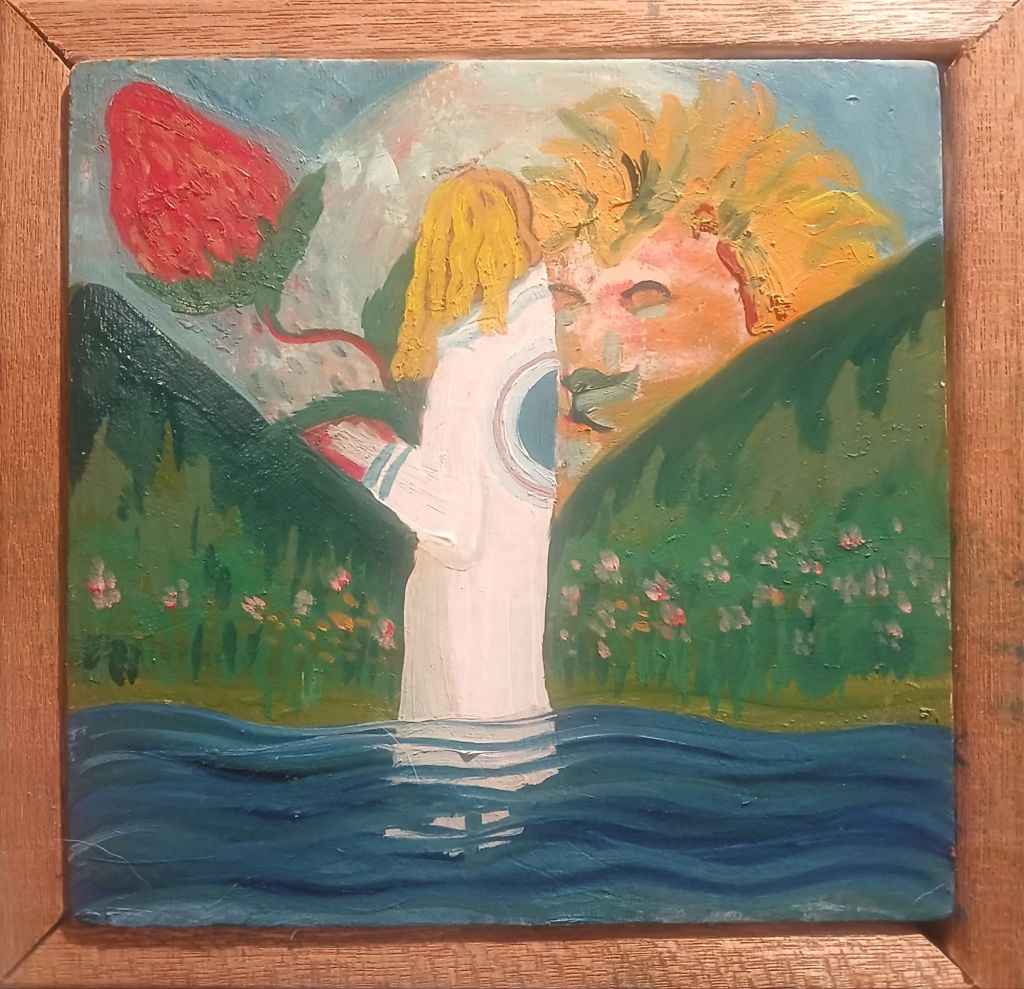
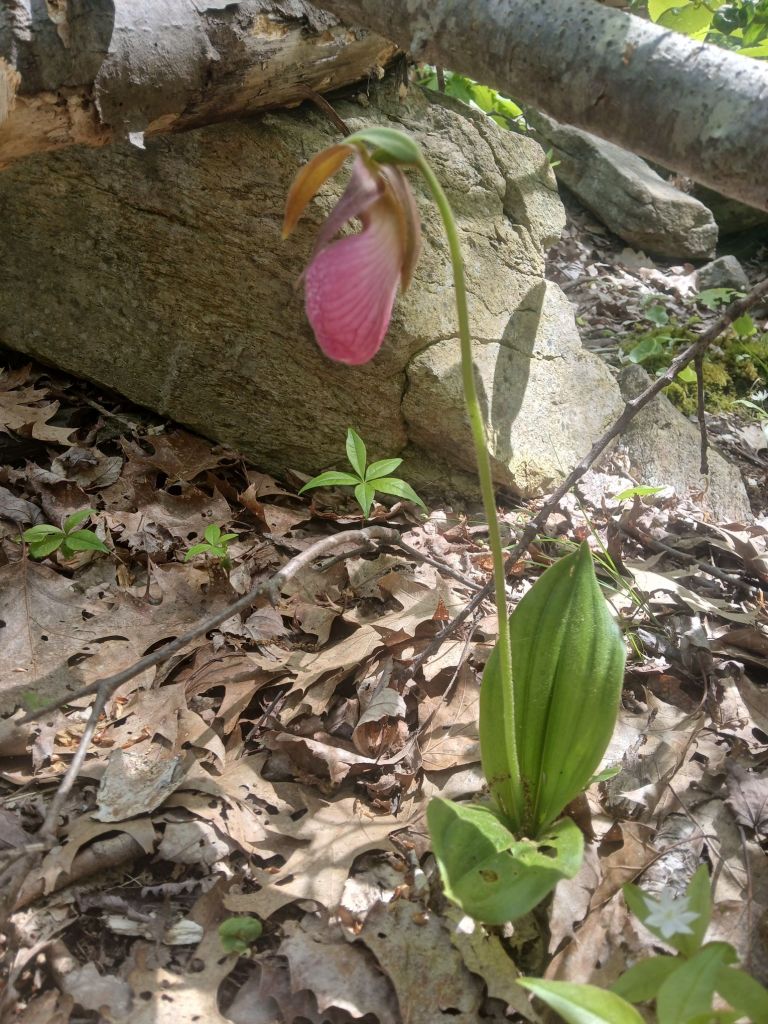
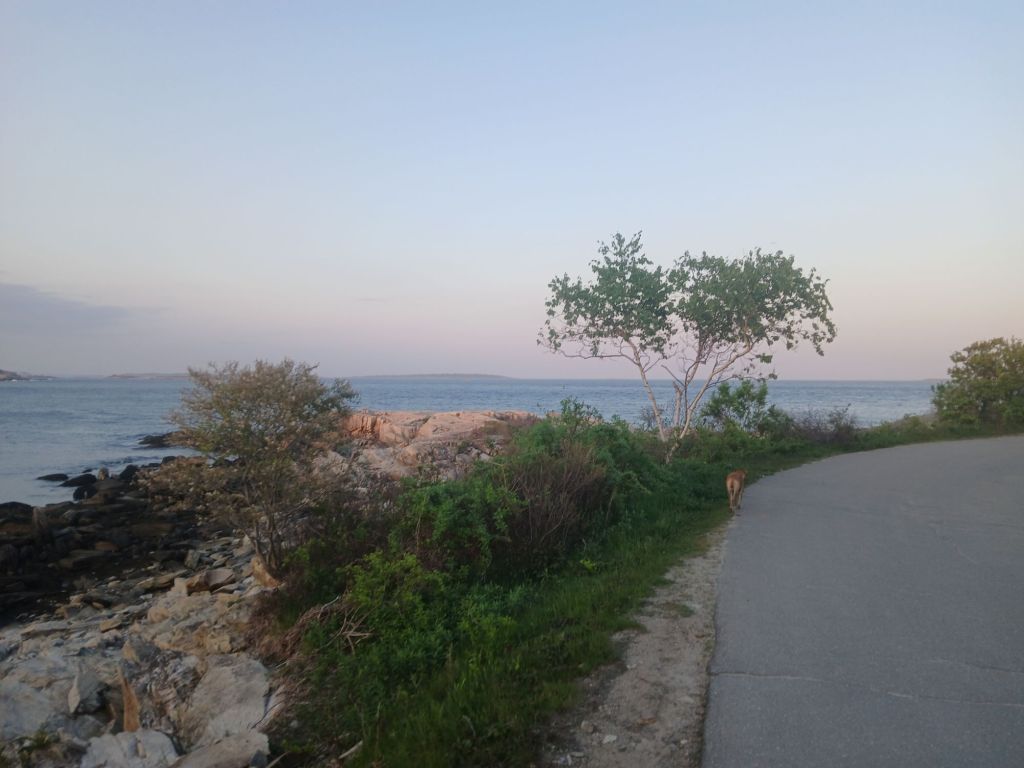
Kat Farrin is a local artist on Peaks Island, Maine, USA. These days sharing images via her observations of birds, plant life, and island landscapes on her daily walks and bike rides around the island. Often she makes paintings of the animals she sees on driftwood or rocks in an aboriginal dream time like way of pointilism . She participates in a weekly writing group and wrote a poem recently that I had the honor of being sent.
It is a windfall because Kat’s work easily invokes the voice of Peaks Island. With an authority that is easy to respect, she speaks up on behalf of the value of surviving life and beauty. The poem is called “small craft advisory” and you’ll have to wait and read it in the March Edition of the Peaks Island News.
Grounded in the earth and real things that she sees, the work she does is worthy of attention. It feels just like the antidote for the times we need. Recalling and presenting to us reminders of life all around us so we can all remember to notice how beautiful life actually is.
For another more intimate installment of admiration for Kat’s work please find
“Rude Awakenings”
Making Peace with the Beast Machine
by Charles A. Kniffen
Chuck writes fondly
a great story of a time with Kat on She-Wolf, titled, Once in a Blue Moon. At the end of the chapter, he corrects himself, She-Wolf was powered by an eight-horse Johnson outboard. He had got the engine wrong on first recount.
In her own words,
“I grew up in the small town of South Bristol, Maine, 13 miles down a peninsula, part of the town being a bridged island, Rutherford Island.
I worked a year on my brother’s lobster boat and then hauled 75 traps from my father’s tiny skiff, Bluey, for a year. After that I got my own lobstering skiff, the Shewolf, and hauled 150 traps by hand for over twenty years.
Feeling the desire for a ‘real island’ I moved to Cliff Island and lived there for 7 years, working on other people’s boats. Then I moved to Peaks Island, where like many, I have lived here off and on for years. While on Cliff, I got a master’s degree, independent study, from Goddard College in writing and art.
I am very grateful for my four children and for nature, which to me is the great out doors, or god, and which somehow I seek.. through writing, taking photos, and through painting… often, but not always on wood drifted to shore.” Kat Farrin
see more work @katfarrin on instagram
Today I’m flying low and I’m
not saying a word
I’m letting all the voodoos of ambition sleep.
The world goes on as it must,
the bees in the garden rumbling a little,
the fish leaping, the gnats getting eaten.
And so forth.
But I’m taking the day off.
Quiet as a feather.
I hardly move though really I’m traveling
a terrific distance.
Stillness. One of the doors
into the temple.
by Mary Oliver
“Shapechangers in Winter”
Margaret Atwood
I.
Through the slit of our open window, the wind
comes in and flows around us, nothingness
in motion, like time. The power of what is not there.
the snow empties itself down, a shadow turning
to indigo, obliterating
everything out there, roofs, cars, garbage cans,
dead flowerstalks, dog turds, it doesn’t matter.
you could read this as indifference
on the part of the universe, or else a relentless
forgiveness: all of our
scratches and blots and mortal
wounds and patched-up jobs
wiped clean in the snow’s huge erasure.
I feel it as a pressure,
an added layer:
above the white waterfall of snow
thundering down; then attic, moth-balled
sweaters, nomadic tents,
the dried words of old letters;
then stairs, then children, cats and radiators, peeling paint,
us in our bed, the afterglow
of a smoky fire, our one candle flickering;
below us, the kitchen in the dark, the wink
of pots on shelves; then books and tools, then cellar
and furnace, graying dolls, a bicycle,
the whole precarious geology of house
crisscrossed with hidden mousetrails,
and under that a buried river
that seeps up through the cement
floor every spring,
and the tree roots snouting their slow way
into the drains;
under that, the bones
of our ancestors, or if not theirs, someone’s,
mixed with a biomass of nematodes;
under that, bedrock, then molten
stone and the earth’s fiery core;
and sideways, out into the city, street
and corner store and mall
and underpass, then barns and ruined woodlands, continent
and island, oceans, mists
of story drifting
on the tide like seaweed, animal
species crushed and blinking out,
and births and illnesses, hatred and love infra-
red, compassion fleshtone, prayer ultra-
violet; then rumours, alternate waves
of sad peace and sad war,
and then the air, and then the scintillating ions,
and then the stars. That’s where
we are.
2.
Some centuries ago, when we lived at the edge
of the forest, on nights like this
you would have put on your pelt of a bear
and shambled off to prowl and hulk
among the trees, and be a silhouette of human
fears against the snowbank.
I would have chosen fox;
I liked the jokes,
the doubling back on my tracks,
and, let’s face it, the theft.
Back then, I had many forms:
the sliding in and out
of my own slippery eelskin,
and yours as well; we were each other’s
iridescent glove, the deft body
all sleight-of-hand and illusion.
Once we were lithe as pythons, quick
and silvery as herring, and we still are, momentarily,
except our knees hurt.
Right now we’re content to huddle
under the shed feathers of duck and goose
as the wind pours like a river
we swim in by keeping still,
like trout in a current.
Every cell
in our bodies has renewed itself
so many times since then, there’s
not much left, my love,
of the originals. We’re footprints
becoming limestone, or think of it
as coal becoming diamond. Less
flexible, but more condensed;
and no more scales or aliases,
at least on the outside. Though we’ve accumulated,
despite ourselves, other disguises:
you as a rumpled elephant—
hide suitcase with white fur,
me as a bramble bush. Well, the hair
was always difficult. Then there’s
the eye problems: too close, too far, you’re a blur.
I used to say I’d know you anywhere,
but it’s getting harder.
3.
This is the solstice, the still point
of the sun, its cusp and midnight,
the year’s threshold
and unlocking, where the past
lets go of and becomes the future;
the place of caught breath, the door
of a vanished house left ajar.
Taking hands like children
lost in a six-dimensional
forest, we step across.
The walls of the house fold themselves down,
and the house turns
itself inside out, as a tulip does
in its last full-blown moment, and our candle
flares up and goes out, and the only common
sense that remains to us is touch,
as it will be, later, some other
century, when we will seem to each other
even less what we were.
But that trick is just to hold on
through all appearances; and so we do,
and yes, I know it’s you;
and that is what we will come to, sooner
or later, when it’s even darker
than It is now, when the snow is colder,
when it’s darkest and coldest
and candles are no longer any use to us
and the visibility is zero: Yes.
It’s still you. It’s still you.
Featured at the GEM Gallery
This week !
Opening Thursday June 21
5-7 with an open mic
June 20-25
10-5p each day.

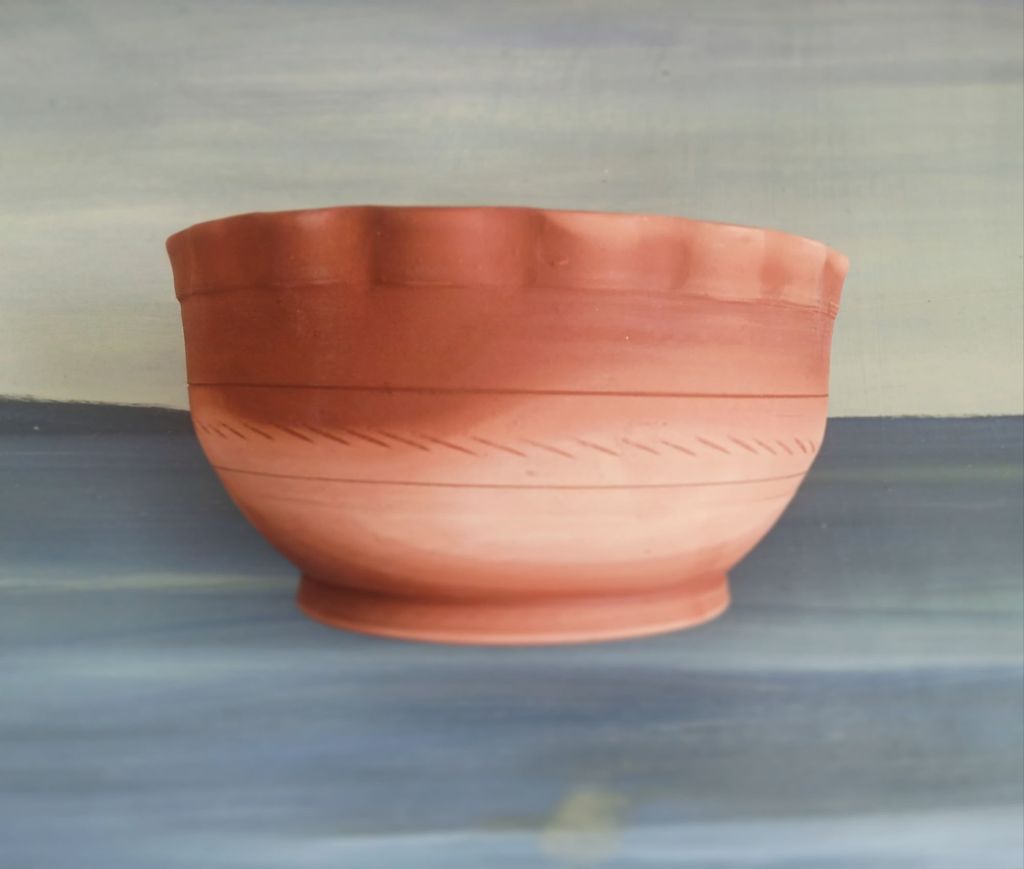
https://mixam.com/print-on-demand/665f3206f971dd7a8df5e209

We all face this essential difficulty; keeping ourselves well.

Excerpt from “In the Public Garden”
New Poems “O To Be A Dragon”
1959 Viking Press, New York
Marianne Moore
First published 1959 in Ladies Home Journal under the title “Boston”
///////
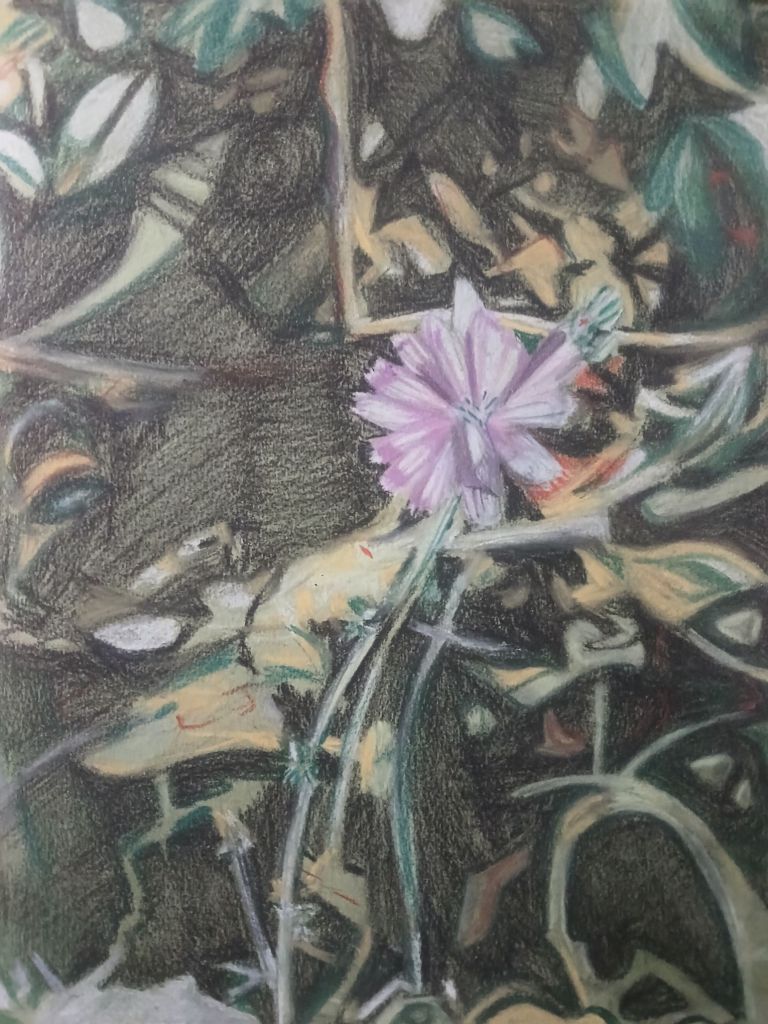
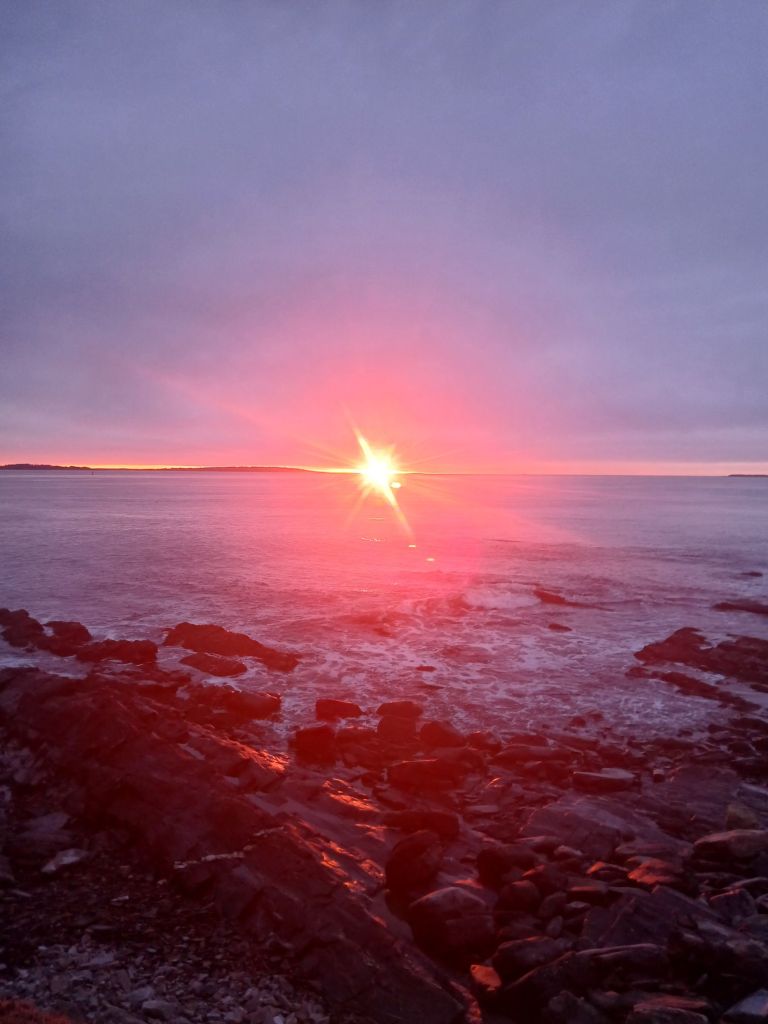
Accompanying illustration of Chicory in conte pastel pencils Jessica George 2024
Peaks Island , Maine, USA
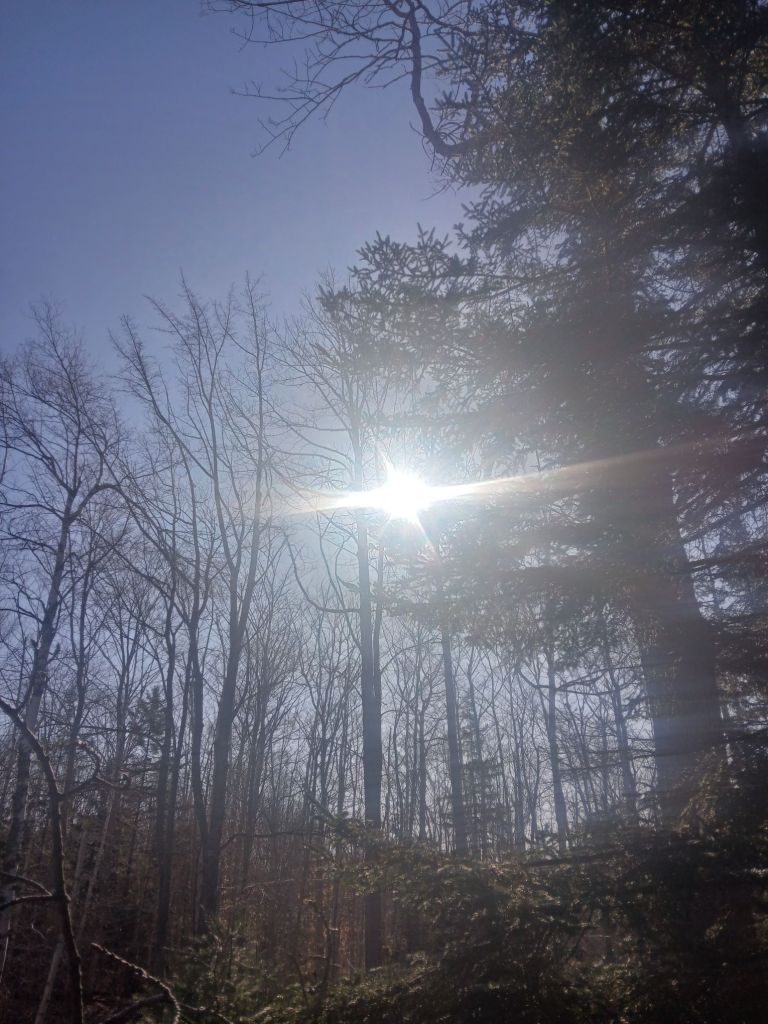


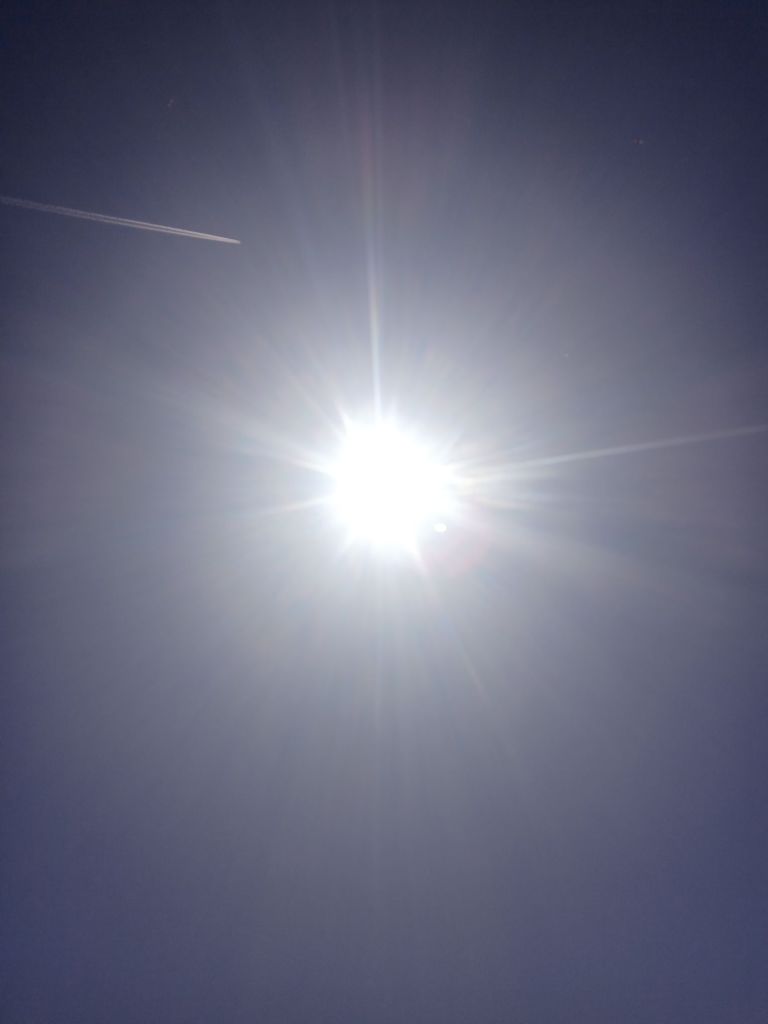
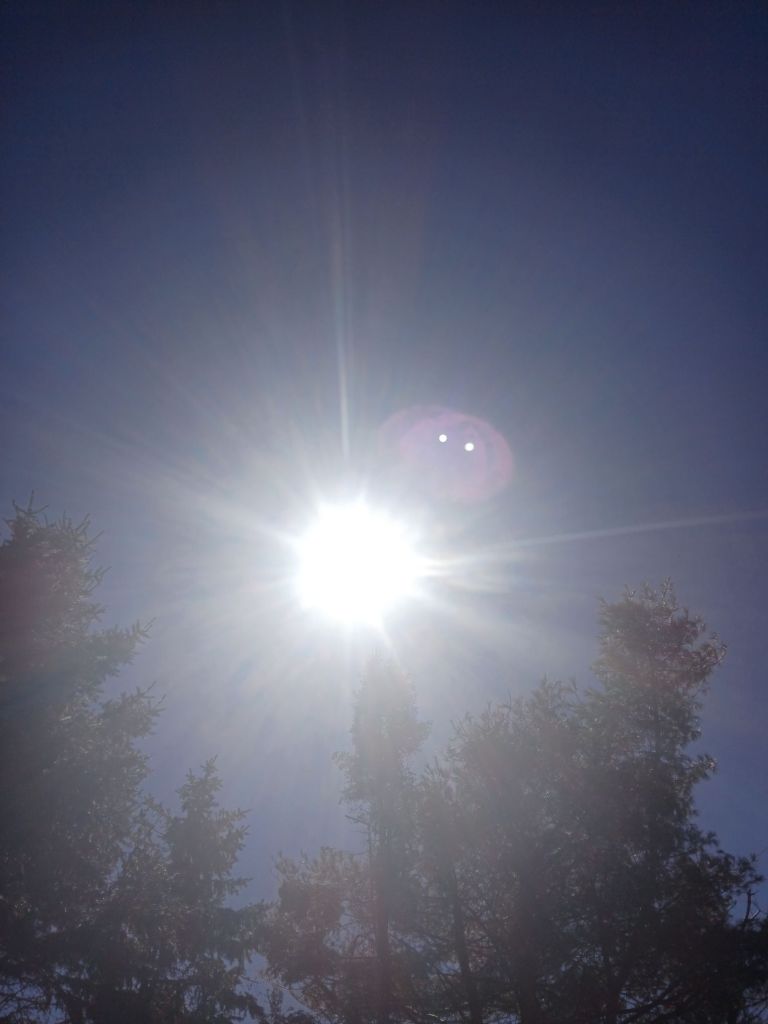


3:30pm 4/8/24

Old Men Fishing From A Bridge
I saw old men fishing from a bridge.
Poles secured to the railing,
Five gallon buckets beside them.
Leaning on the railing
Staring at the water.
At the end of the bridge,
parked along the road were trucks
real trucks – Chevys Fords, Dodges,
for this was Maine.
The old men watched; the inflowing tide,
The ruffle of wind on the water,
The eddys of flowing water
The tide’s slow rise.
They listened to the tern’s cries,
the eiders murmurs,
the water’s musical flow,
the wind’s voice.
Fishing is easy, catching a fish is hard,
Learning to fish is even harder.
The fisherman’s hands tell of the lessons
callouses on thumb, scars
from hook or spines
muscles on the wrist and arm
(from casting and reeling)
And his face, red and peeling nose,
squinting eyes,
Weather darkened skin.
But none of these show the fisherman’s
Great lesson.
Patience!
waiting for opening day
the tide to change
the weather to clear
the wind to drop
the temperature to rise or fall.
Then!
The squawking terns!
The swirling flashing water
moves closer!
Within casting distance!
Patience is repaid!
This day, beside the gray haired fisherman
A young boy, a grandson,
jerks his pole and reels,
reels in with young, happy arms.
A mackerel.
To be admired
By seven old men.
The lesson has started.
It’s easy to fish
harder to catch a fish,
harder still to learn how to fish.
Water must be watched,
and birds, and wind, and the weather.
A fisherman must learn time and tide,
must learn from squinting
into the sun or rain.
Must learn there is always tomorrow,
another tide, another bridge,
or next season.
But mostly a boy
Learns of patience.
The patience of old men
Fishing from a bridge.
William R. Hinderer
Peaks Island, Maine
2009
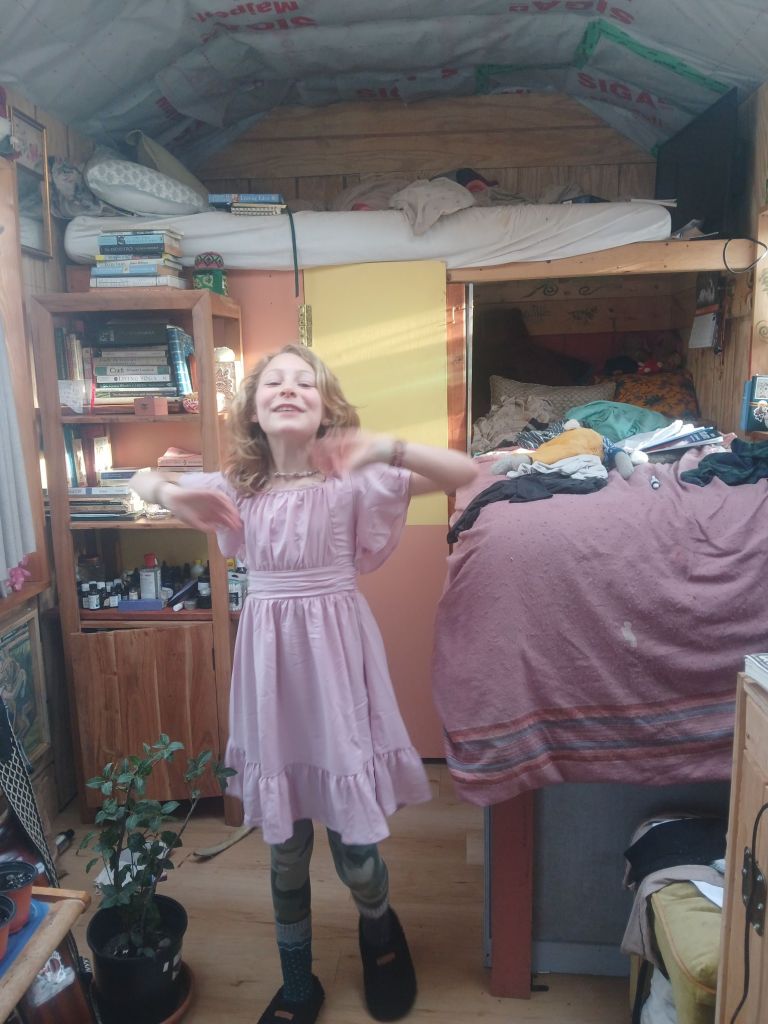
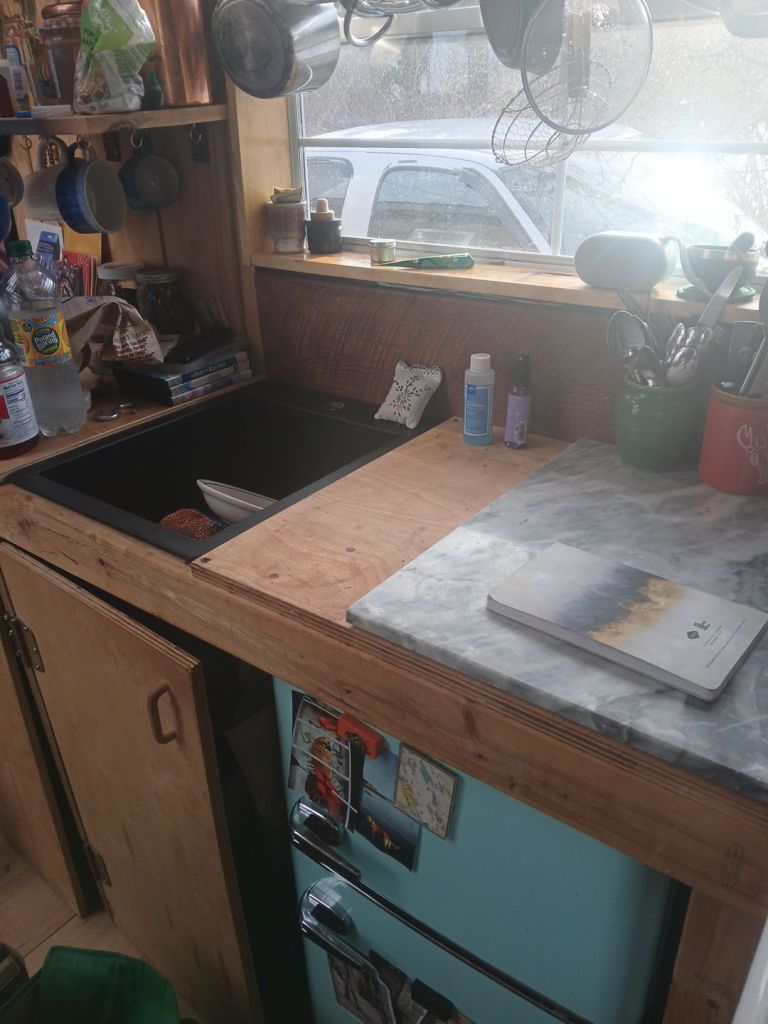
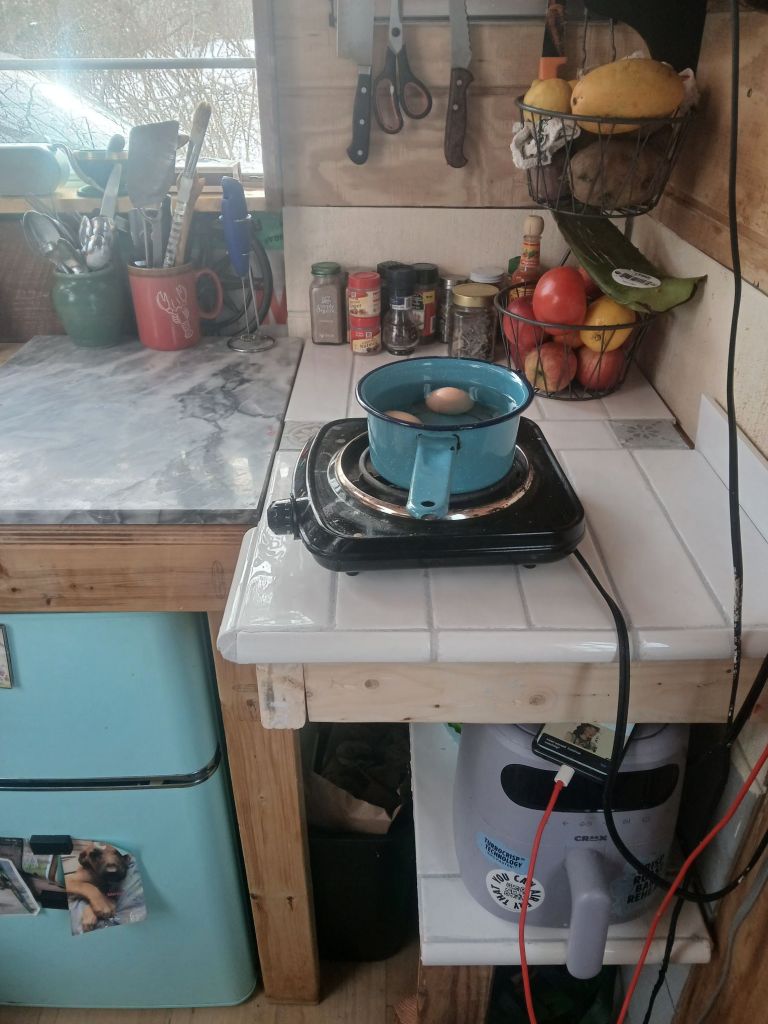
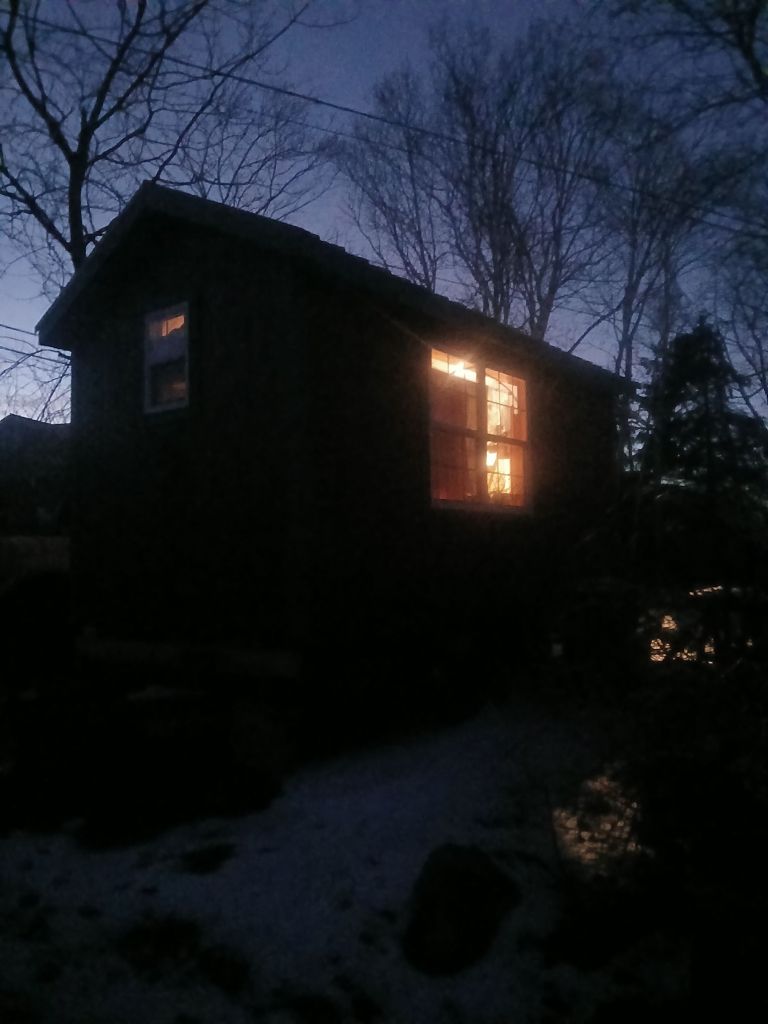
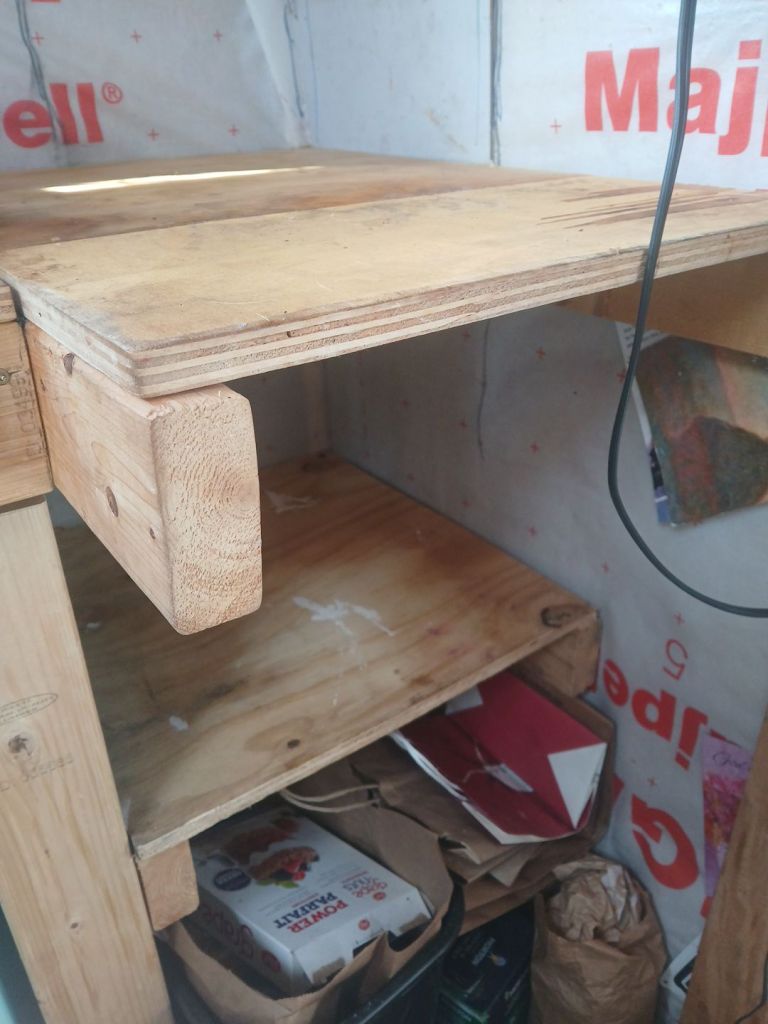
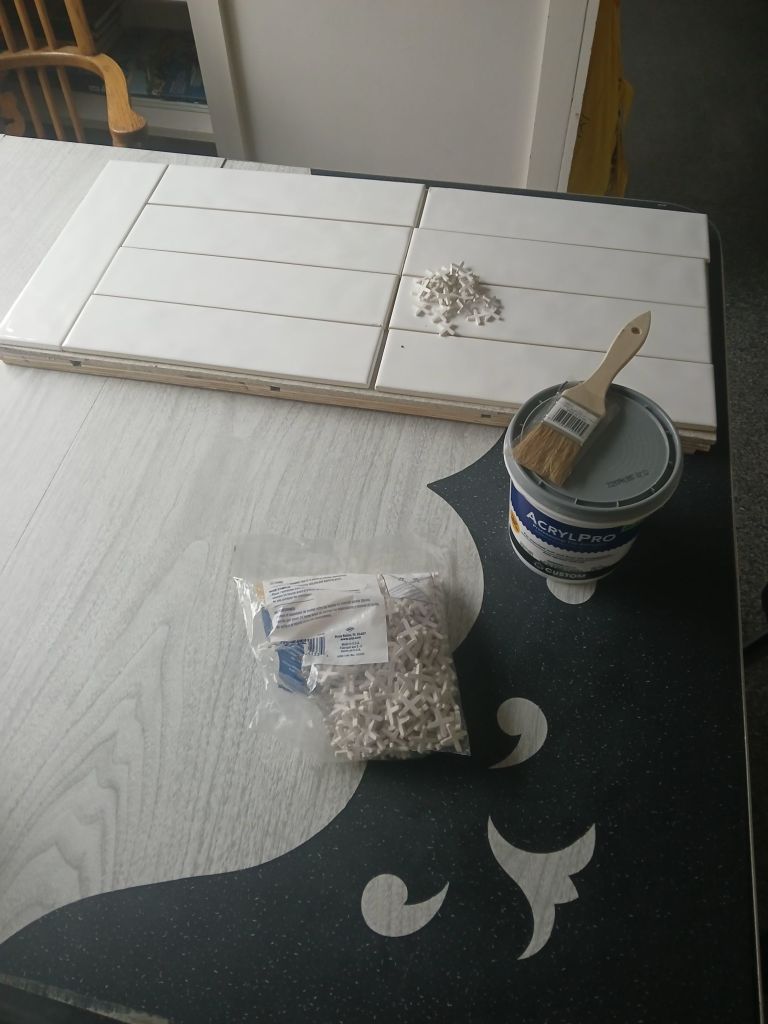
A year ago April 6 we welcomed the shell to our shelter, built out to our specifications by Hill View Mini Barns in Gray. It is the anniversary of it being delivered to the island for me to finish the interior. here are some before and after images.
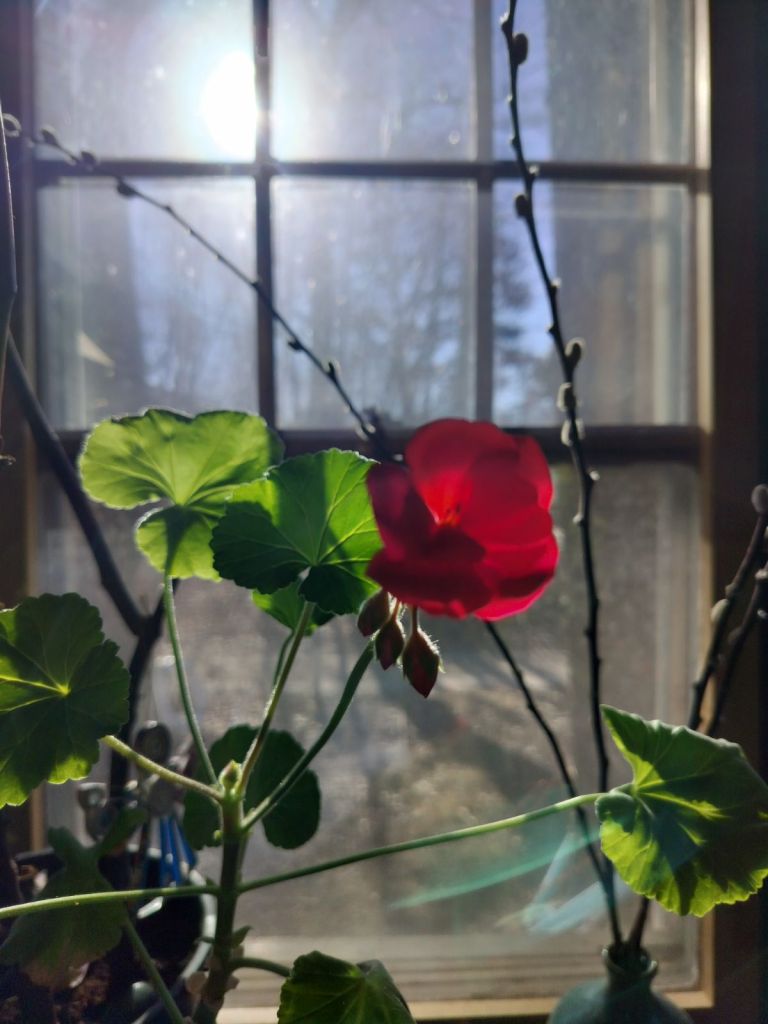
Floor, wall, bunks, countertop space, closet, plants, food, 5gallon water jug, instruments and clothes , dog, child and mother later. We have a really decent space!
Transforming personal space. Form follows function. Thank you to those who have helped support this effort of building affordably and sustainably to live and learn from. Thank you to all who have shared water and electricity with us.
Now to finish the ceiling of this sanctuary, and moving to our own property where we can drill a well and continue to develop a larger design plan of sustainable homesteading.












 True Blue Island